
Torque Failure in Panel Screws – Over-Tightening Damage Explained (M4–M6 Guide)
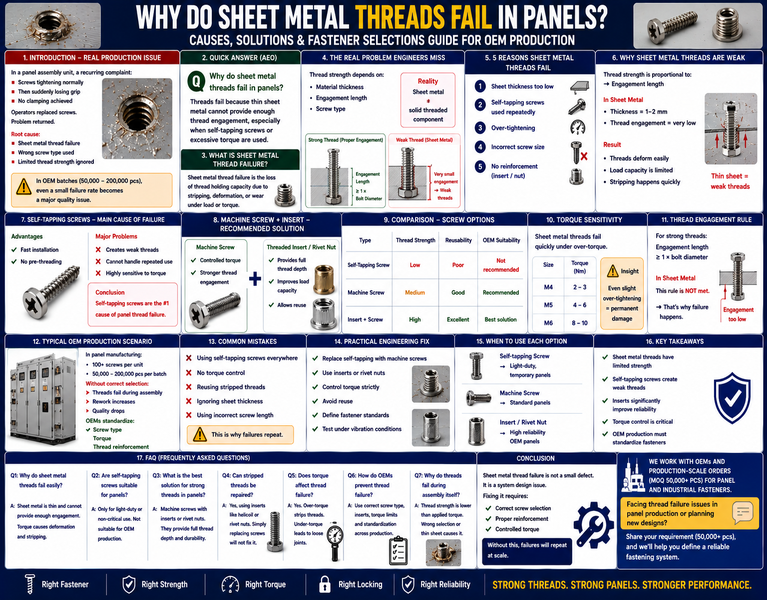
Introduction – Real Assembly Issue In a panel production line, operators reported: 👉 Screws tightening initially👉 Then suddenly “free spinning”👉 No clamping achieved
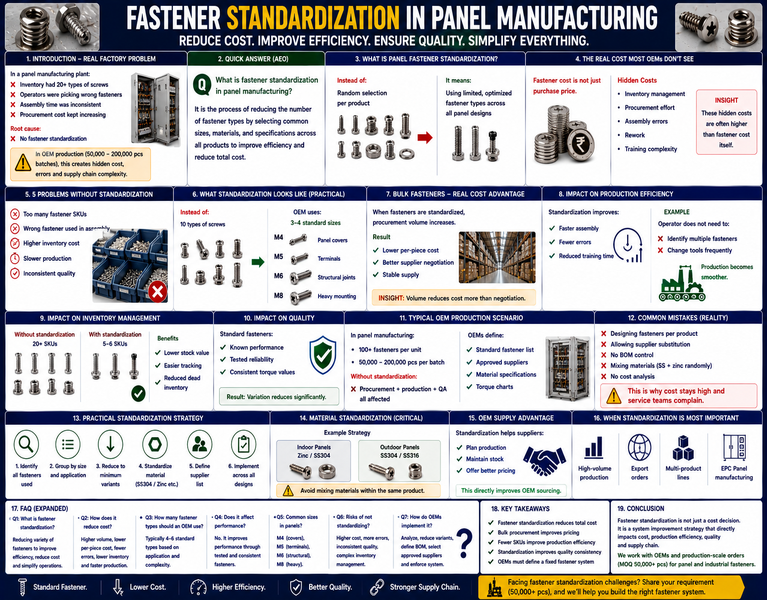
Introduction – Real Production Problem In one panel manufacturing unit, failures were not consistent: 👉 Some screws rusted👉 Some joints loosened👉 Some threads stripped S
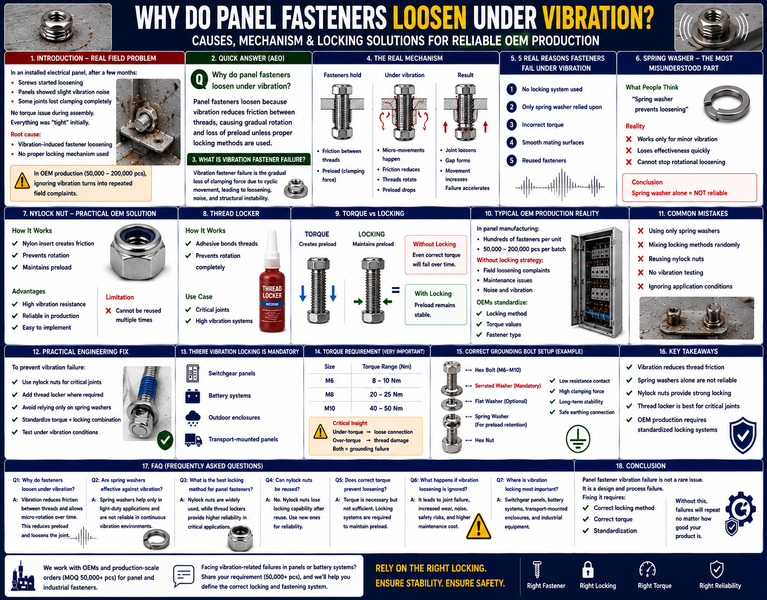
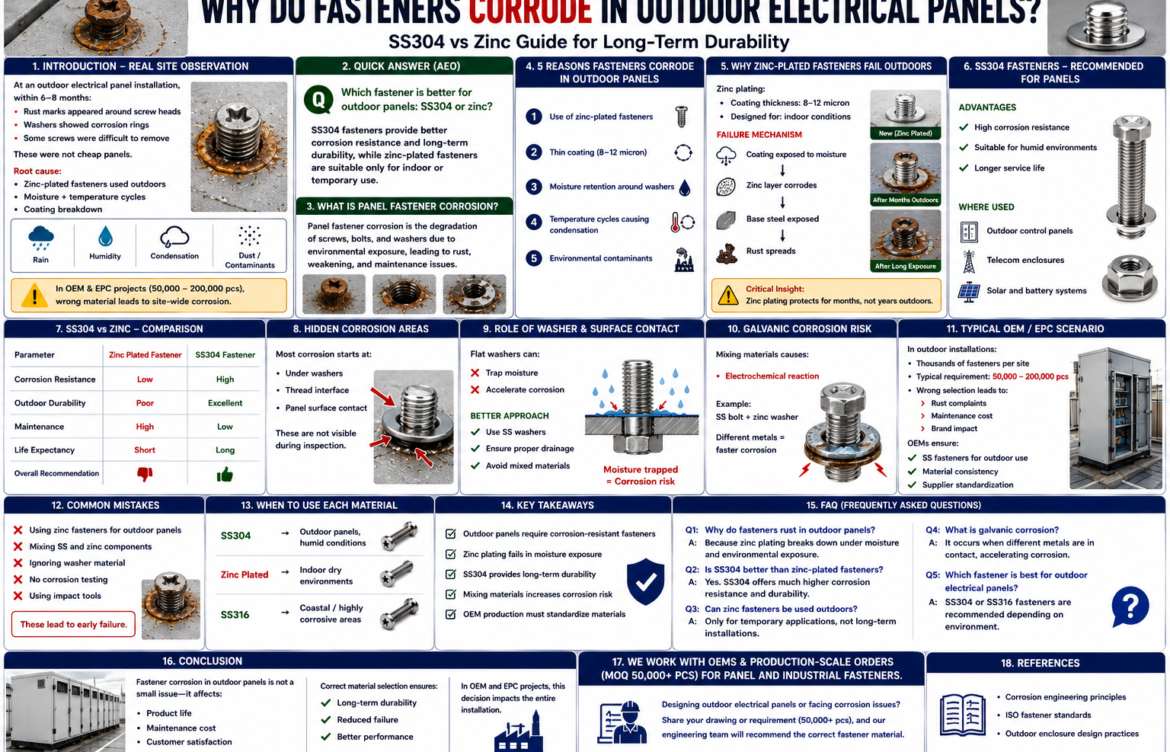
Introduction – Real Site Observation At an outdoor electrical panel installation, within 6–8 months: 👉 Rust marks appeared around screw heads👉 Washers showed corrosion ri
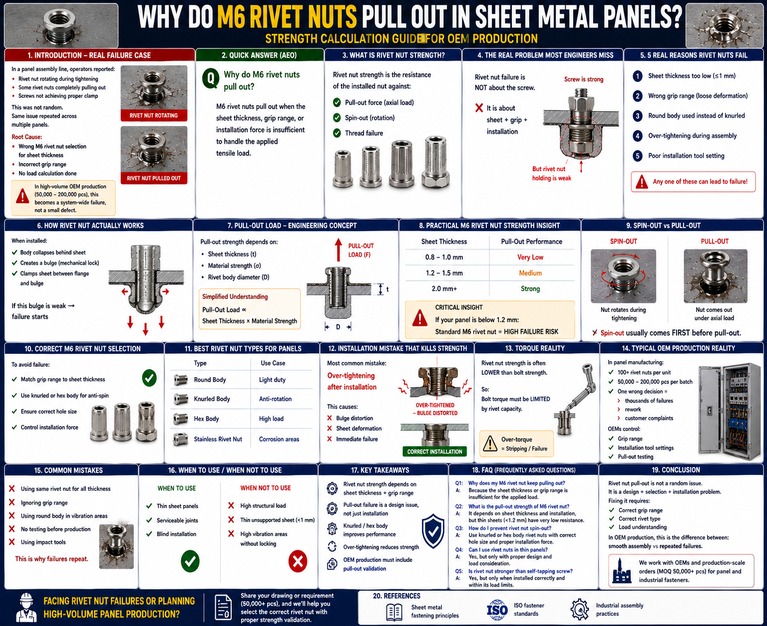
Introduction – Real Failure Case In a panel assembly line, operators reported: 👉 Rivet nut rotating during tightening👉 Some rivet nuts completely pulling out👉 Screws not
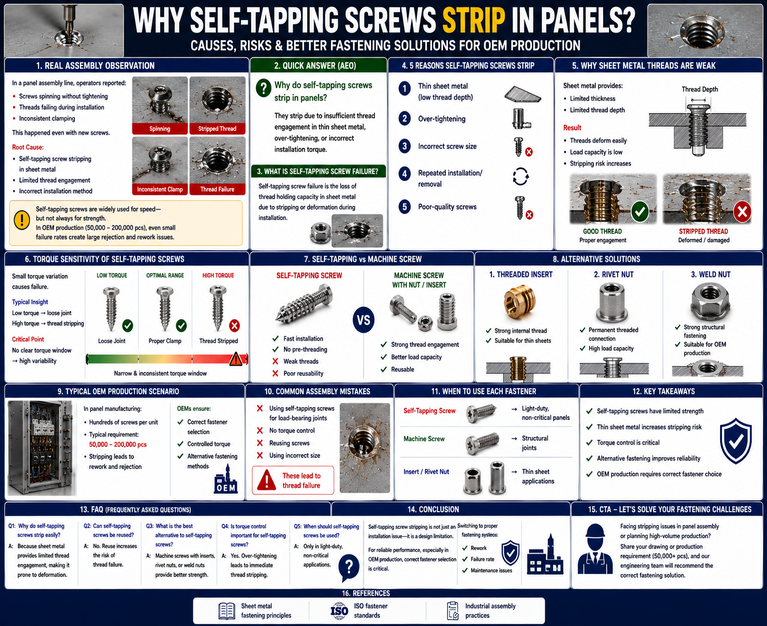
Introduction – Real Assembly Observation In a panel assembly line, operators reported: 👉 Screws spinning without tightening👉 Threads failing during installation👉 Inconsi
Introduction – Real Panel Observation During load testing of an electrical panel, one busbar joint showed: 👉 Temperature rise above normal 👉 Slight discoloration 👉 No vi
Introduction – Real Field Observation In an electrical enclosure, panel doors started showing: 👉 Slight sagging👉 Misalignment at closing👉 Loose hinge connection After in
Introduction – Real Production Scenario In an electrical panel assembly line, two fastening methods were used: 👉 Weld nuts for fixed joints👉 Cage nuts for rack mounting Dur
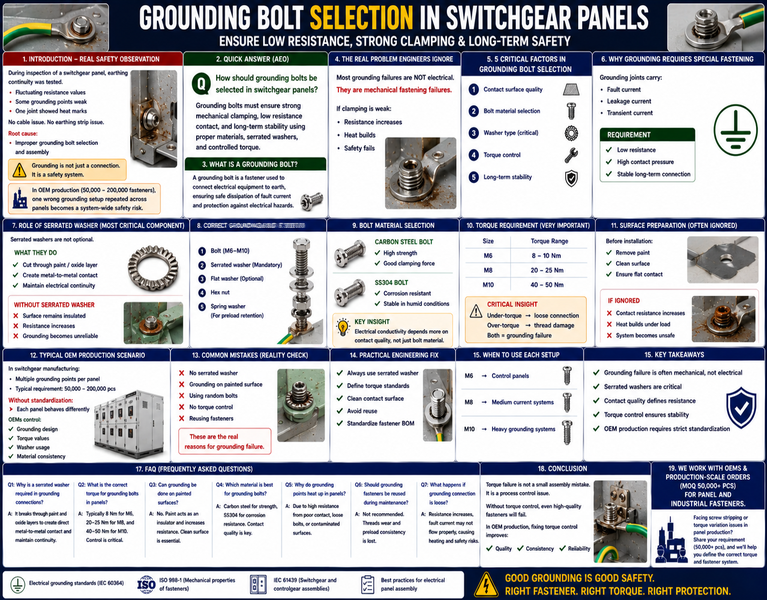
Introduction – Real Panel Observation During inspection of a switchgear panel, one terminal showed: 👉 Slight discoloration👉 Heat marks near connection👉 Loose M5 screw No
Introduction – Real Production Observation In a sheet-metal electrical panel line, several mounting points failed during assembly: 👉 Nuts detached from panel👉 Threads spun