
5 Reasons Hinge Screws Fail in Electrical Panels (Self-Tapping vs SS Guide)
Introduction – Real Field Observation In an electrical enclosure, panel doors started showing: 👉 Slight sagging👉 Misalignment at closing👉 Loose hinge connection After in
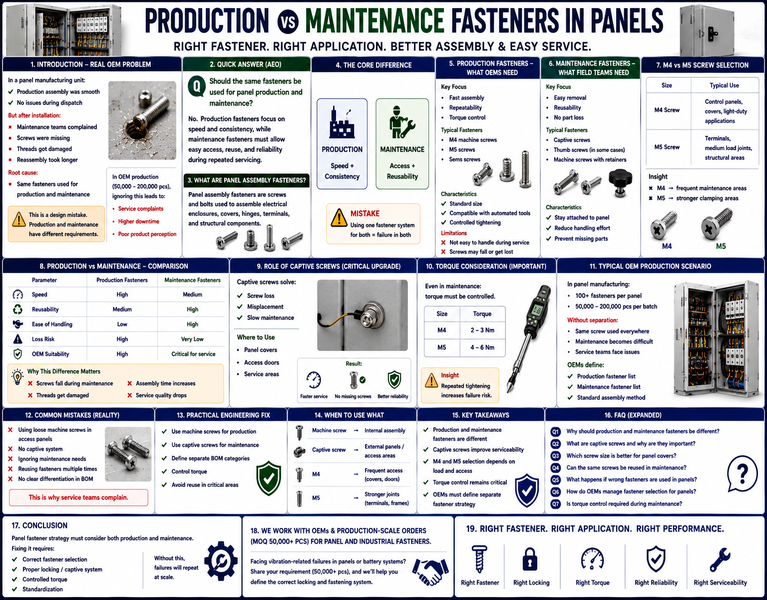
Introduction – Real Production Scenario In an electrical panel assembly line, two fastening methods were used: 👉 Weld nuts for fixed joints👉 Cage nuts for rack mounting Dur
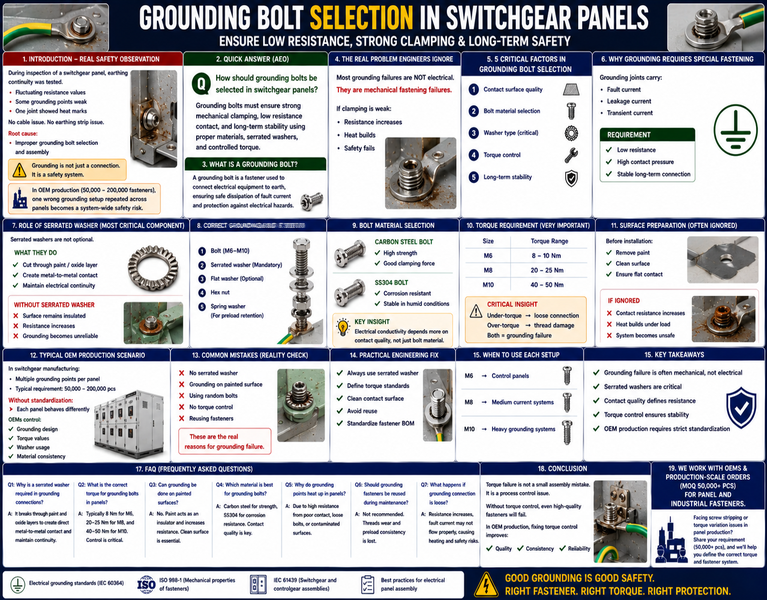
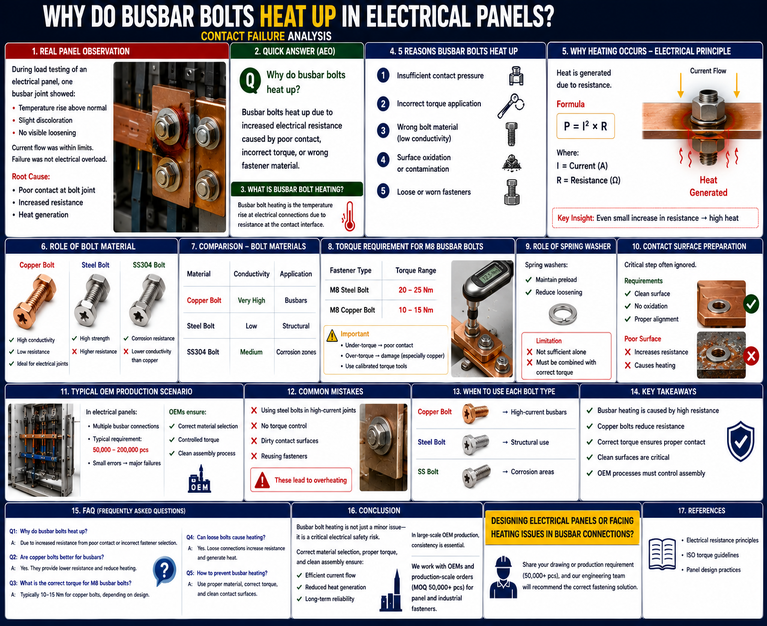
Introduction – Real Panel Observation During inspection of a switchgear panel, one terminal showed: 👉 Slight discoloration👉 Heat marks near connection👉 Loose M5 screw No
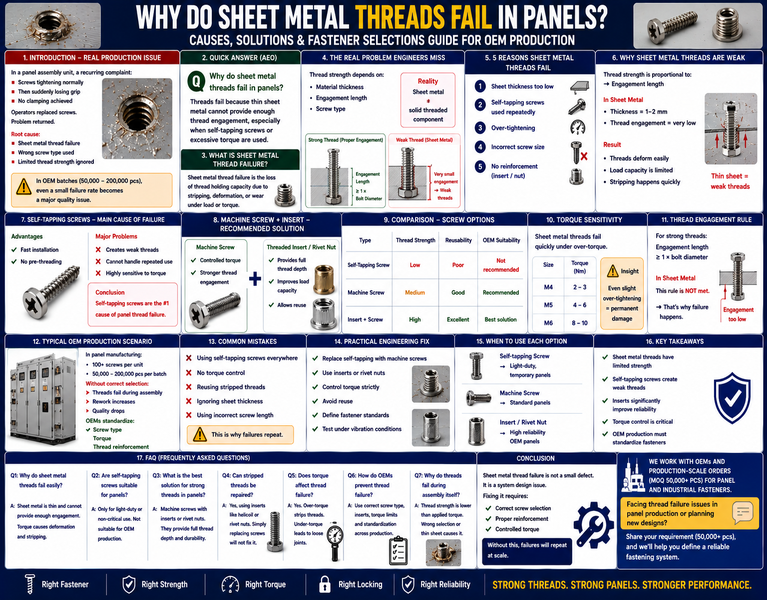
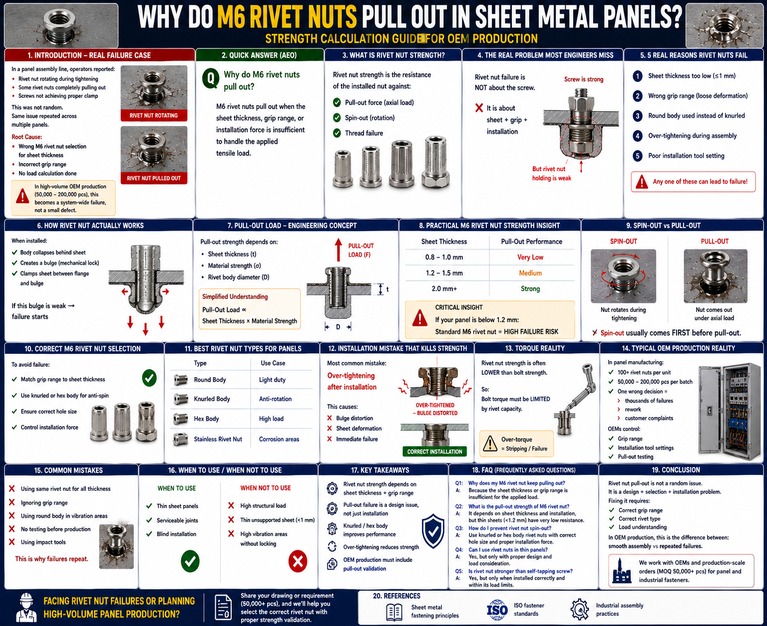
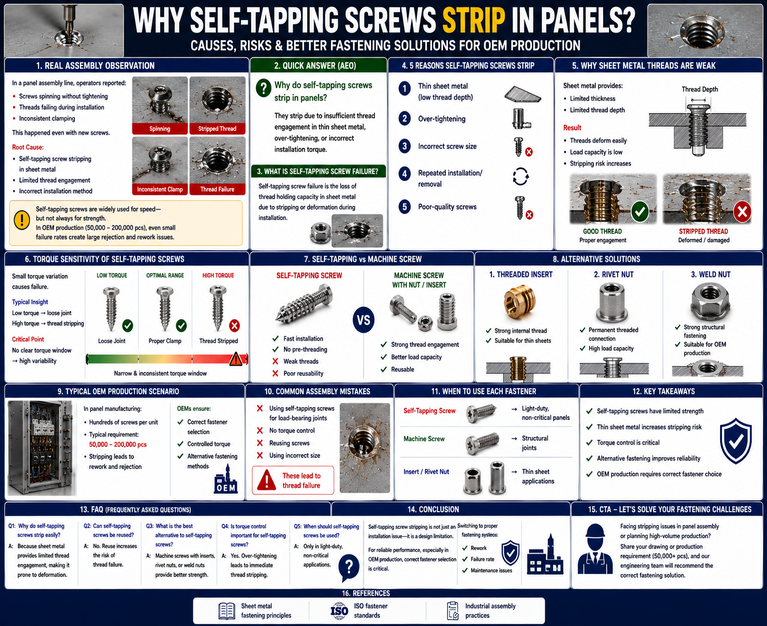
Introduction – Real Production Observation In a sheet-metal electrical panel line, several mounting points failed during assembly: 👉 Nuts detached from panel👉 Threads spun
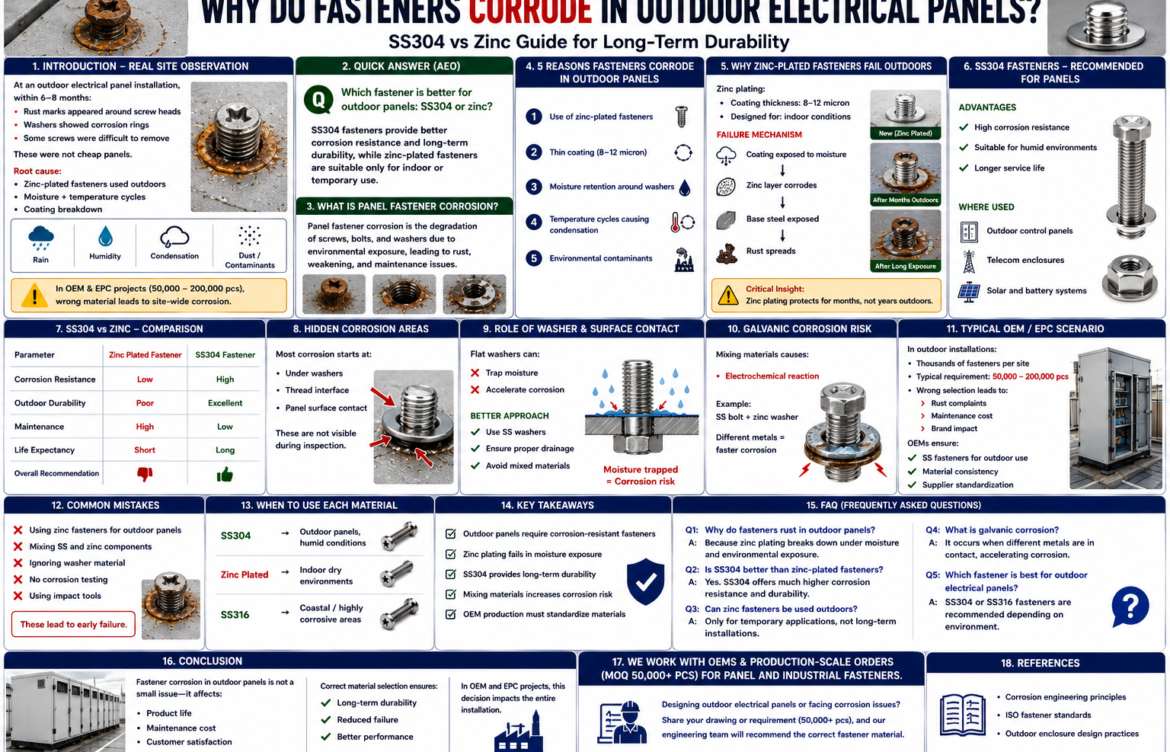
Introduction – Real Panel Observation In an indoor electrical control panel, screws showed: 👉 Light rust formation around heads👉 Discoloration near contact points👉 Diffi
Introduction – Real Site Observation During inspection of a battery installation, bolts appeared clean from the top. No visible rust on heads or threads. But after removing a few
Introduction – Real Assembly Observation In an EV battery pack, one terminal showed: 👉 Temperature rise under load👉 Slight voltage drop👉 Bolt remained tight The issue wa
Introduction – Real Field Observation In a battery support frame, an M12 bolt fractured after months of operation. No overload.No corrosion. Failure appeared sudden. Root cause:
Introduction – Real Field Observation In road testing of an EV battery pack, several joints showed: 👉 Gradual loosening after vibration cycles👉 Reduced preload👉 Noise an
Introduction – Real Assembly Observation During assembly of a battery frame, joints appeared tight—but alignment was off: 👉 Frame edges not flush👉 Uneven gap between memb