
Introduction – Real Site Observation
In an outdoor BESS installation, anchor bolts looked intact during initial inspection. Within a year:
👉 Rust formed under washers
👉 Torque dropped below required values
👉 Base plates showed slight movement
No major failure—but early signs of structural risk.
Root cause:
👉 Zinc-plated M12 anchor bolts used outdoors
👉 Insufficient corrosion protection
👉 Loss of preload over time
Outdoor BESS systems operate for 15–20 years, exposed to rain, soil moisture, and temperature cycles.
In EPC projects, anchor bolts are used in 50,000–200,000 pcs installations, where incorrect selection leads to long-term failure across the site.
Quick Answer
Why do M12 anchor bolts fail in outdoor BESS projects?
Failure occurs due to corrosion of zinc-plated bolts, reducing preload and structural stability. HDG (Hot Dip Galvanized) anchors provide better long-term protection.
What is BESS Anchor Bolt Failure?
BESS anchor bolt failure is the degradation of anchoring performance due to corrosion, preload loss, or inadequate material selection in outdoor environments.
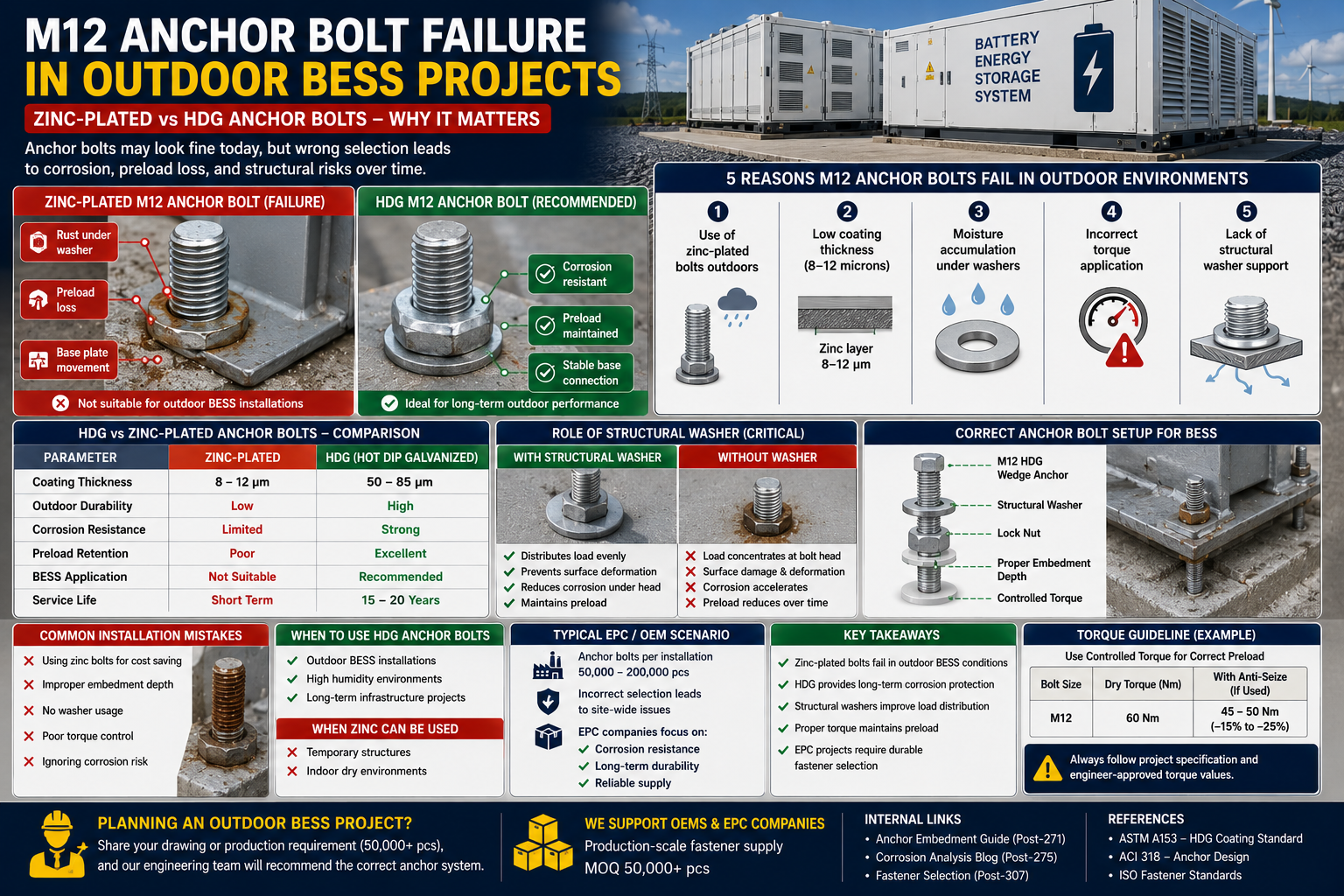
5 Reasons M12 Anchor Bolts Fail
- Use of zinc-plated bolts outdoors
- Low coating thickness (8–12 microns)
- Moisture accumulation under washers
- Incorrect torque application
- Lack of structural washer support
Why Zinc-Plated Anchor Bolts Fail Outdoors
Zinc plating:
👉 Thickness: 8–12 microns
👉 Designed for: indoor or short-term use
Not suitable for:
- Rain exposure
- Soil contact
- Long-term outdoor installations
Failure Mechanism
- Moisture penetrates coating
- Zinc layer corrodes
- Steel exposed
- Rust formation begins
- Preload reduces
HDG Anchor Bolt Advantage
Hot Dip Galvanizing (HDG):
👉 Coating thickness: 50–85 microns
👉 Metallurgical bond with steel
Benefits
✔ Long-term corrosion resistance
✔ Better performance in outdoor environments
✔ Maintains preload over time
HDG vs Zinc – Comparison
| Parameter | Zinc Plating | HDG |
| Coating Thickness | 8–12 µm | 50–85 µm |
| Outdoor Durability | Low | High |
| Corrosion Resistance | Limited | Strong |
| BESS Application | Not suitable | Recommended |
Role of Structural Washer
✔ Distribute load evenly
✔ Prevent surface deformation
✔ Maintain preload
Without Washer
- Load concentrates at bolt head
- Corrosion accelerates under washer
- Preload reduces
Correct Anchor Bolt Setup for BESS
Recommended configuration:
- M12 HDG wedge anchor
- Structural washer
- Lock nut
- Proper embedment depth
- Controlled torque
Typical EPC / OEM Scenario
In outdoor BESS projects:
- Thousands of anchor bolts per installation
- Typical requirement: 50,000–200,000 pcs
- Incorrect selection leads to site-wide issues
EPC companies focus on:
✔ Corrosion resistance
✔ Long-term durability
✔ Reliable supply
Common Installation Mistakes
- Using zinc bolts for cost saving
- Improper embedment depth
- No washer usage
- Poor torque control
👉 These lead to premature failure
When to Use HDG Anchor Bolts
✔ Outdoor BESS installations
✔ High humidity environments
✔ Long-term infrastructure projects
When Zinc Can Be Used
- Temporary structures
- Indoor dry environments
Key Takeaways
• Zinc-plated bolts fail in outdoor BESS conditions
• HDG provides long-term corrosion protection
• Structural washers improve load distribution
• Proper torque maintains preload
• EPC projects require durable fastener selection
FAQ
Q1: Why do anchor bolts corrode in BESS projects?
Corrosion occurs due to exposure to moisture and inadequate coating like zinc plating.
Q2: What is the best anchor bolt for outdoor BESS systems?
M12 HDG wedge anchors are recommended for long-term outdoor performance.
Q3: How does corrosion affect anchor bolt performance?
Corrosion reduces cross-section and preload, leading to structural instability.
Q4: Are structural washers necessary for anchor bolts?
Yes. They distribute load and help maintain joint stability.
Q5: Can zinc-plated bolts be used outdoors?
They can be used temporarily but are not suitable for long-term outdoor use.
Conclusion
M12 anchor bolt failure in outdoor BESS projects is not a random issue—it is a material selection problem.
Choosing the right coating and installation method is essential for long-term performance.
In large-scale EPC projects, small mistakes lead to large structural risks over time.
👉 We work with OEMs and EPC companies for production-scale fastener supply (MOQ 50,000+ pcs).
Planning an outdoor BESS project or facing anchor corrosion issues?
Share your drawing or production requirement (50,000+ pcs), and our engineering team will recommend the correct anchor system.
References
- ASTM A153 – HDG coating standard
- ACI 318 – Anchor design
- ISO fastener standards