

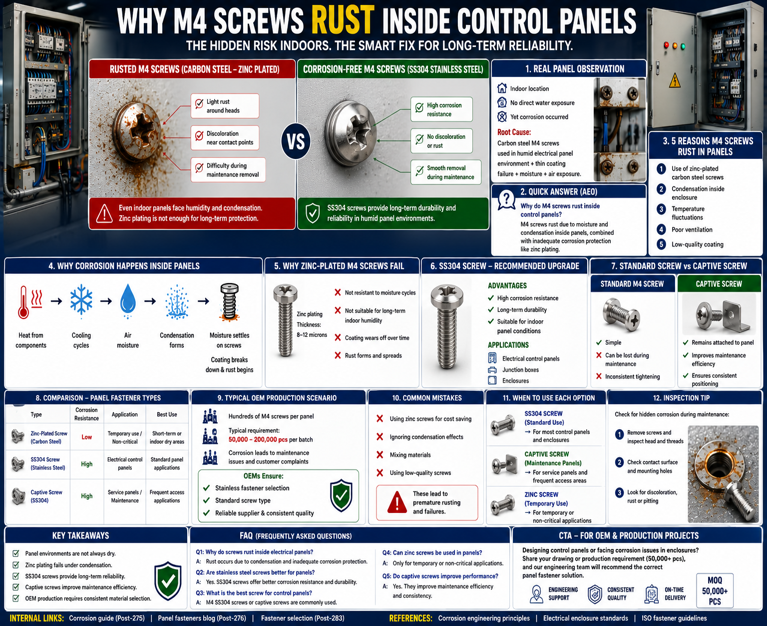
Introduction – Real Panel Observation
In an indoor electrical control panel, screws showed:
👉 Light rust formation around heads
👉 Discoloration near contact points
👉 Difficulty during maintenance removal
The environment was not harsh:
👉 Indoor location
👉 No direct water exposure
Yet corrosion occurred.
Root cause:
👉 Carbon steel M4 screws used in humid electrical panel environment
👉 Thin coating failure
👉 Moisture + air exposure
Even inside control panels, conditions are not always dry. Temperature changes create condensation, leading to corrosion over time.
In OEM panel manufacturing, these screws are used in 50,000–200,000 pcs batches, where material choice impacts long-term performance.
Quick Answer
Why do M4 screws rust inside control panels?
M4 screws rust due to moisture and condensation inside panels, combined with inadequate corrosion protection like zinc plating.
What is Panel Screw Corrosion?
Panel screw corrosion is the degradation of fasteners inside electrical enclosures due to humidity, condensation, and inadequate material protection.
5 Reasons M4 Screws Rust in Panels
- Use of zinc-plated carbon steel screws
- Condensation inside enclosure
- Temperature fluctuations
- Poor ventilation
- Low-quality coating
Why Corrosion Happens Inside Panels
Control panels experience:
👉 Heat from components
👉 Cooling cycles
👉 Air moisture
Result
- Condensation forms
- Moisture settles on screws
- Coating breaks down
- Rust begins
Why Zinc-Plated M4 Screws Fail
Zinc plating:
👉 Thickness: 8–12 microns
Limitations
- Not resistant to moisture cycles
- Not suitable for long-term indoor humidity
- Coating wears off over time
SS304 Screw – Recommended Upgrade
Advantages
✔ High corrosion resistance
✔ Long-term durability
✔ Suitable for indoor panel conditions
Application
- Electrical control panels
- Junction boxes
- Enclosures
Standard Screw vs Captive Screw
Standard M4 Screw
✔ Simple
❌ Can be lost during maintenance
❌ Inconsistent tightening
Captive Screw
✔ Remains attached to panel
✔ Improves maintenance efficiency
✔ Ensures consistent positioning
Comparison – Panel Fastener Types
| Type | Corrosion Resistance | Application |
| Zinc-Plated Screw | Low | Temporary use |
| SS304 Screw | High | Control panels |
| Captive Screw | High | Service panels |
Typical OEM Production Scenario
In electrical panel manufacturing:
- Hundreds of M4 screws per unit
- Typical requirement: 50,000–200,000 pcs per batch
- Corrosion leads to maintenance issues
OEMs ensure:
✔ Stainless fastener selection
✔ Standard screw type
✔ Reliable supplier
Common Mistakes
- Using zinc screws for cost saving
- Ignoring condensation effects
- Mixing materials
- Using low-quality screws
👉 These lead to premature rusting
When to Use Each Option
✔ SS304 screw → standard panel use
✔ Captive screw → maintenance panels
✔ Zinc screw → temporary applications
Key Takeaways
• Panel environments are not always dry
• Zinc plating fails under condensation
• SS304 screws provide long-term reliability
• Captive screws improve maintenance
• OEM production requires consistent material selection
FAQ
Q1: Why do screws rust inside electrical panels?
Rust occurs due to condensation and inadequate corrosion protection.
Q2: Are stainless steel screws better for panels?
Yes. SS304 screws offer better corrosion resistance and durability.
Q3: What is the best screw for control panels?
M4 SS304 screws or captive screws are commonly used.
Q4: Can zinc screws be used in panels?
Only for temporary or non-critical applications.
Q5: Do captive screws improve performance?
Yes. They improve maintenance efficiency and consistency.
Conclusion
M4 screw rusting in control panels is not just a cosmetic issue—it affects maintenance, reliability, and long-term performance.
Switching to SS304 screws ensures better durability and reduces failure risk.
In high-volume OEM production, material consistency is critical.
👉 We work with OEMs and production-scale orders (MOQ 50,000+ pcs) for electrical and industrial applications.
Designing control panels or facing corrosion issues in enclosures?
Share your drawing or production requirement (50,000+ pcs), and our engineering team will recommend the correct panel fastener solution.
References
- Corrosion engineering principles
- Electrical enclosure standards
- ISO fastener guidelines