


Galvanic Corrosion in Battery Mounting Bolts? This Is What Is Failing on Your Site
Battery mounting systems use steel frames, copper grounding strips, aluminum trays, and different fasteners. When SS304 bolts, zinc plated bolts, copper, and aluminum are mixed in one joint, a hidden reaction begins: galvanic corrosion.
Across battery rooms and energy storage systems, engineers are now finding white powder, rust stains, seized bolts, and weak joints on mounting frames. The batteries still operate, but the structure slowly loses strength.
This is not a chemical leak.
It is an electrochemical fastener failure.
When two dissimilar metals contact in the presence of moisture, the less noble metal corrodes faster. Zinc and mild steel sacrifice themselves, while stainless remains protected. The joint weakens from the inside.
How This Problem Appears on Site
White or green powder near bolts
Rust stains on racks
Seized or snapped fasteners
Pitting on aluminum frames
Loose battery mounts
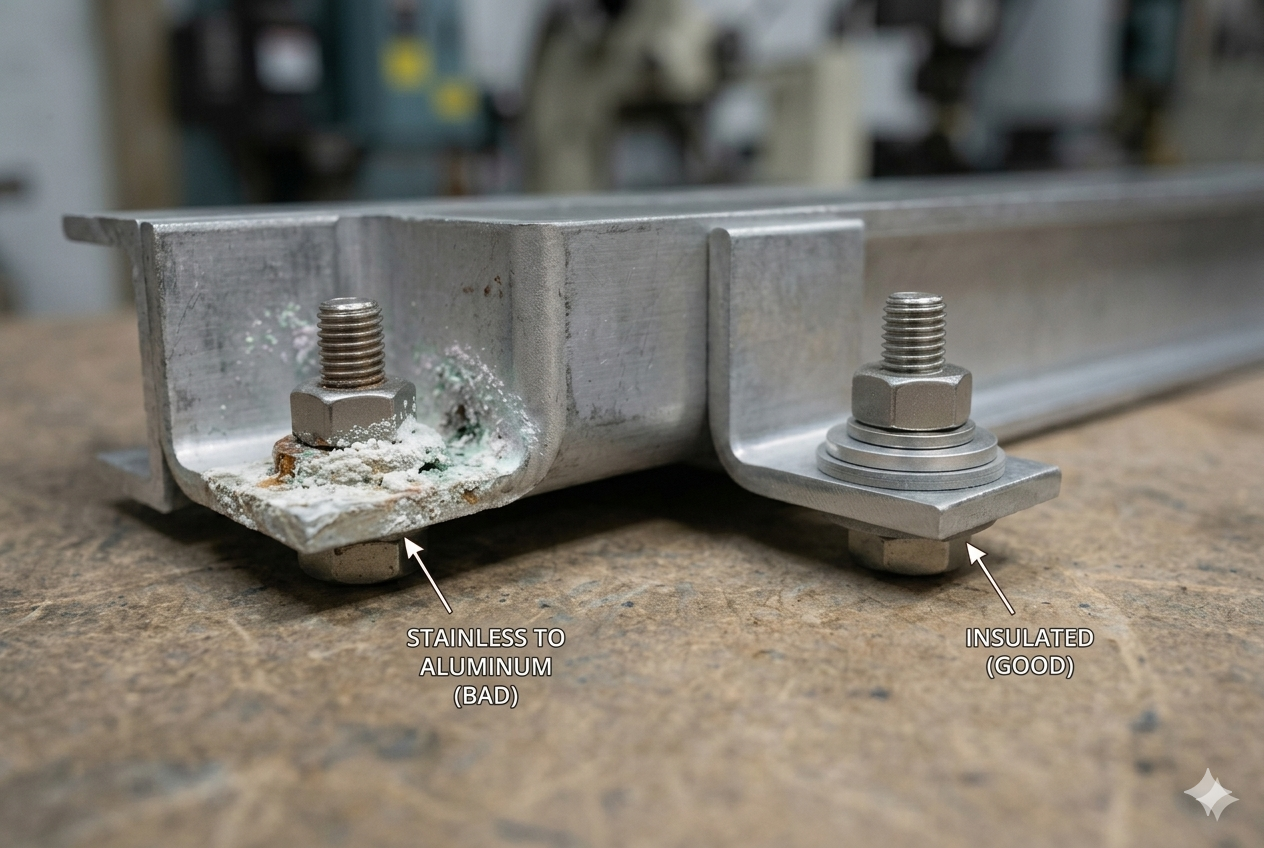
6 Causes of Galvanic Corrosion in Battery Fasteners
1) Mixed Metal Contact
SS bolts touching zinc, copper, or aluminum.
2) Moist Environment
Humidity completes the electrical circuit.
3) No Insulating Washer
Direct metal contact accelerates corrosion.
4) Thin Coatings
Zinc layers wear quickly.
5) Electrical Ground Paths
Current flow increases corrosion rate.
6) Poor Maintenance
Early corrosion goes unnoticed.
Technical Failures Seen in the Field
| Issue | Result |
| Pitted bolts | Strength loss |
| White corrosion | Joint damage |
| Seized threads | Maintenance failure |
| Loose frames | Structural risk |
Correct Fastener Setup to Stop Galvanic Corrosion
Sizes: M10, M12
Material: SS304 stainless
Hardware: Flat washers, insulated washers, threaded rods, hex bolts
How to Prevent Mixed Metal Corrosion
Use same metal fasteners across the joint
Add insulating washers
Apply anti-corrosion paste
Keep joints dry
Inspect regularly
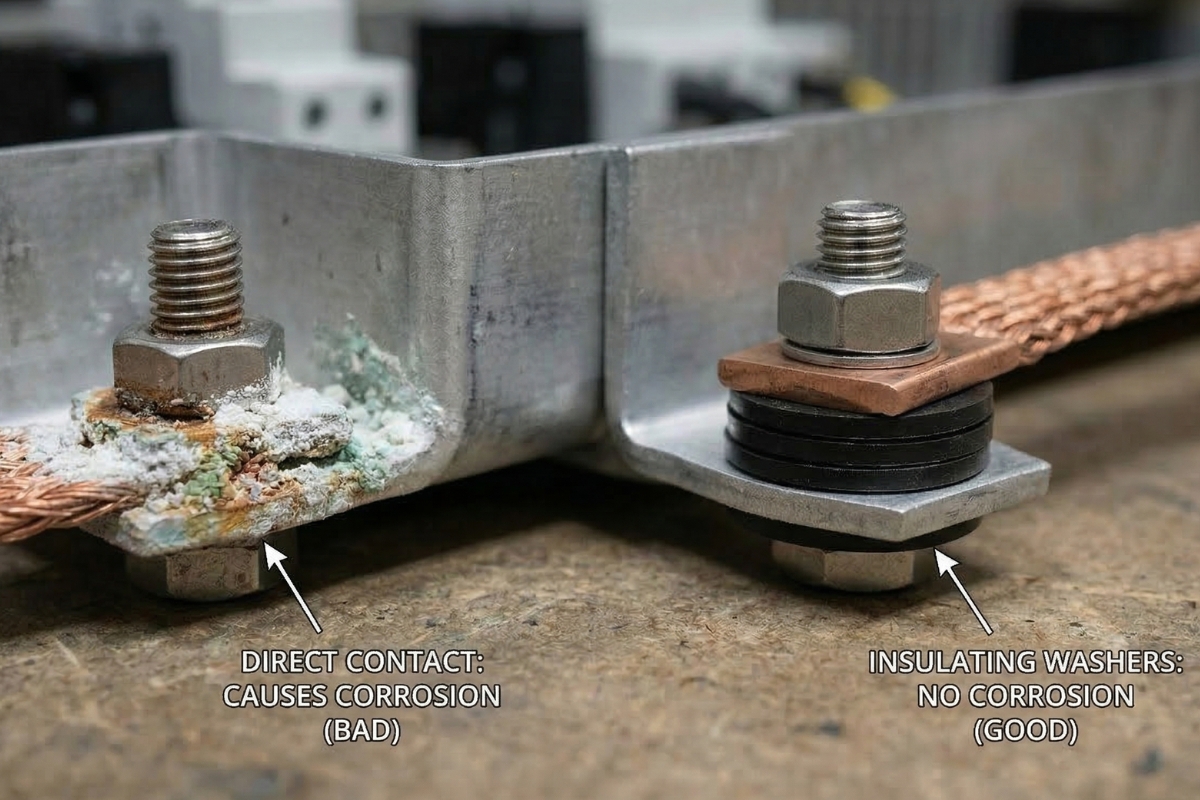
Engineering Truth
Mixed metals silently destroy structures.
External References
ISO Corrosion Guide – https://www.iso.org
Electrochemical Safety – https://www.iea.org