

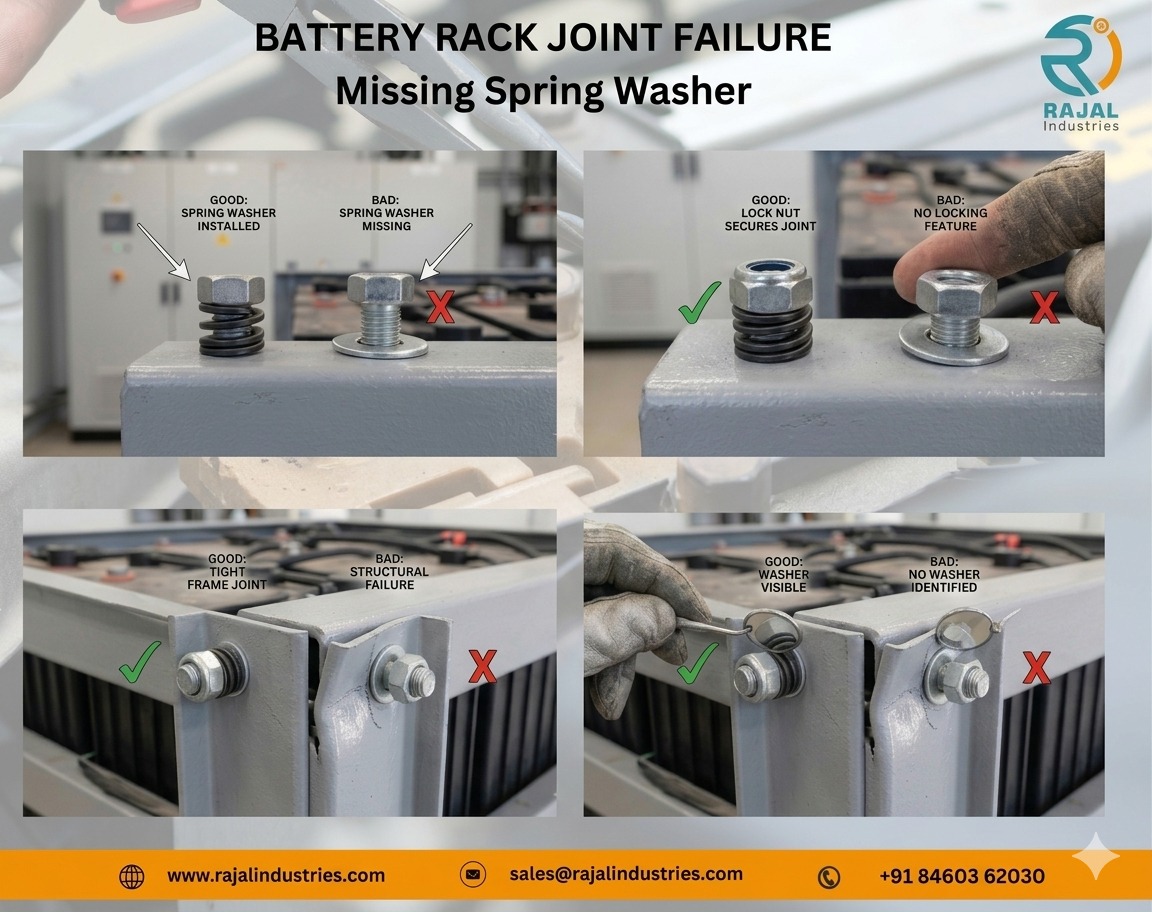
No Spring Washer in Battery Racks? This Is What Is Failing on Your Site
Battery racks are designed to carry heavy battery modules in energy storage systems, inverter rooms, telecom backup sites, and industrial power plants. These racks are assembled using M10 and M12 fasteners that must stay tight under vibration, load, and temperature changes.
Across many sites, engineers are now seeing rattling frames, backing-out bolts, cracked welds, bent plates, and frequent retightening. When the joints are inspected, the root cause is often simple and repeated again and again:
The spring washer is missing.
This is not a rack design problem.
It is a fastener joint design failure.
Spring washers are designed to maintain tension when movement, vibration, and thermal expansion occur. Without them, even strong bolts will slowly lose clamping force. Once a joint begins to move, stress shifts into the frame, welds crack, and the entire structure becomes unsafe.
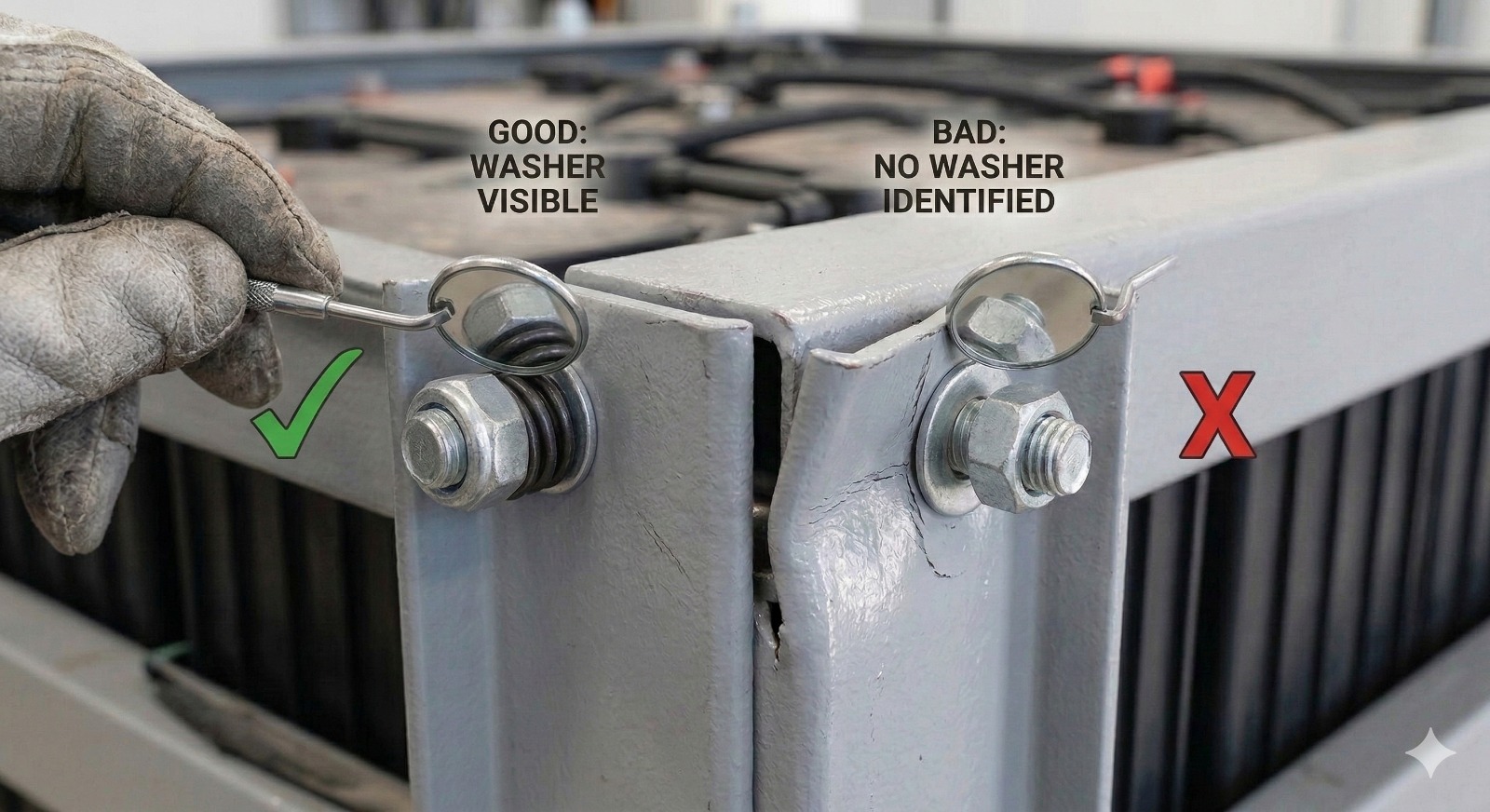
How This Problem Appears on Site
Engineers usually notice these warning signs:
Nuts rotating by hand
Gaps between rack members
Rattling noise during operation
Bolts backing out repeatedly
Missing or flattened washers
These are clear signs of battery fastener failure.
6 Reasons Joints Fail Without Spring Washers
1) Loss of Clamp Load
Without spring force, bolt tension drops quickly after installation.
2) Vibration Loosening
Movement breaks friction between the nut and surface.
3) Thermal Expansion
Heating and cooling relax bolt tension.
4) Frame Flexing
Structural movement stresses the joint.
5) Washer Deformation
Flat washers bend and stop supporting the joint.
6) Fatigue Cracking
Repeated joint movement weakens the frame and fastener.
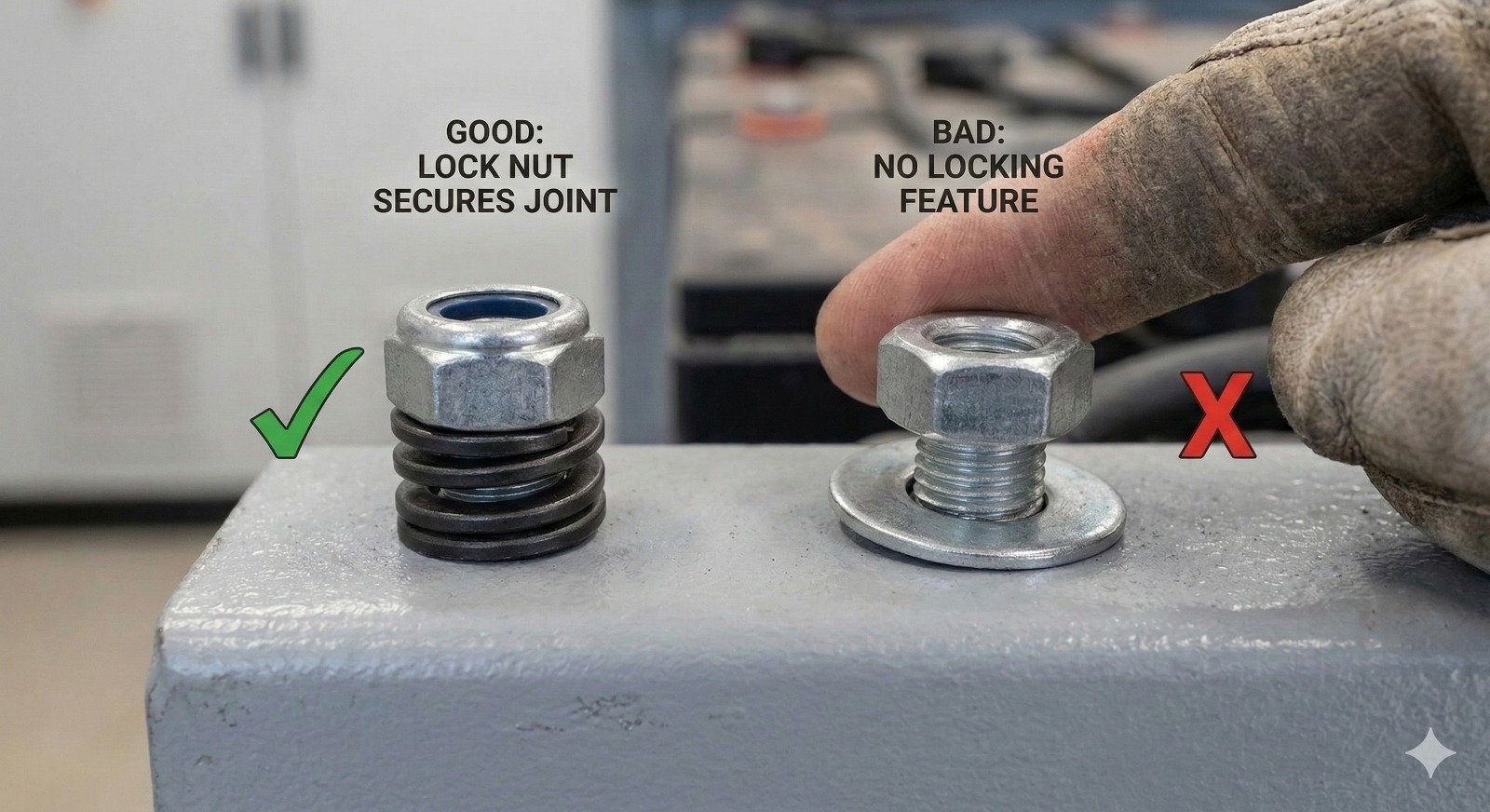
Technical Failures Seen in the Field
| Issue | Result |
| Loose bolts | Joint movement |
| Missing washers | No locking force |
| Bent plates | Structural stress |
| Snapped bolts | Rack failure |
Correct Fastener Setup for Battery Racks
Recommended Sizes:
M10, M12′
Recommended Hardware:
- Spring washers
- Hex bolts
- Lock nuts
- Flange bolts
- Serrated washers
These components work together to maintain joint tension under vibration.
How to Prevent Battery Fastener Failure
Install spring washers under every nut
Use lock nuts for vibration resistance
Tighten to correct torque
Inspect joints every 6 months
Why This Matters in Battery Systems
Battery racks support heavy loads and often operate 24/7. When joints loosen, vibration increases. This affects cable routing, battery alignment, and electrical connections. Over time, loose joints cause frame damage, increase maintenance costs, and raise safety risks.
Most failures start small, but they grow silently.
A missing washer today becomes a collapsed rack tomorrow.
Engineering Truth
A joint without a spring washer will always fail under vibration.
Fasteners must lock, not just tighten.
Strong joints protect the entire battery system.
External References
ISO Fastener Joints – https://www.iso.org
Energy Storage Safety – https://www.iea.org