

Introduction – Real Site Hook
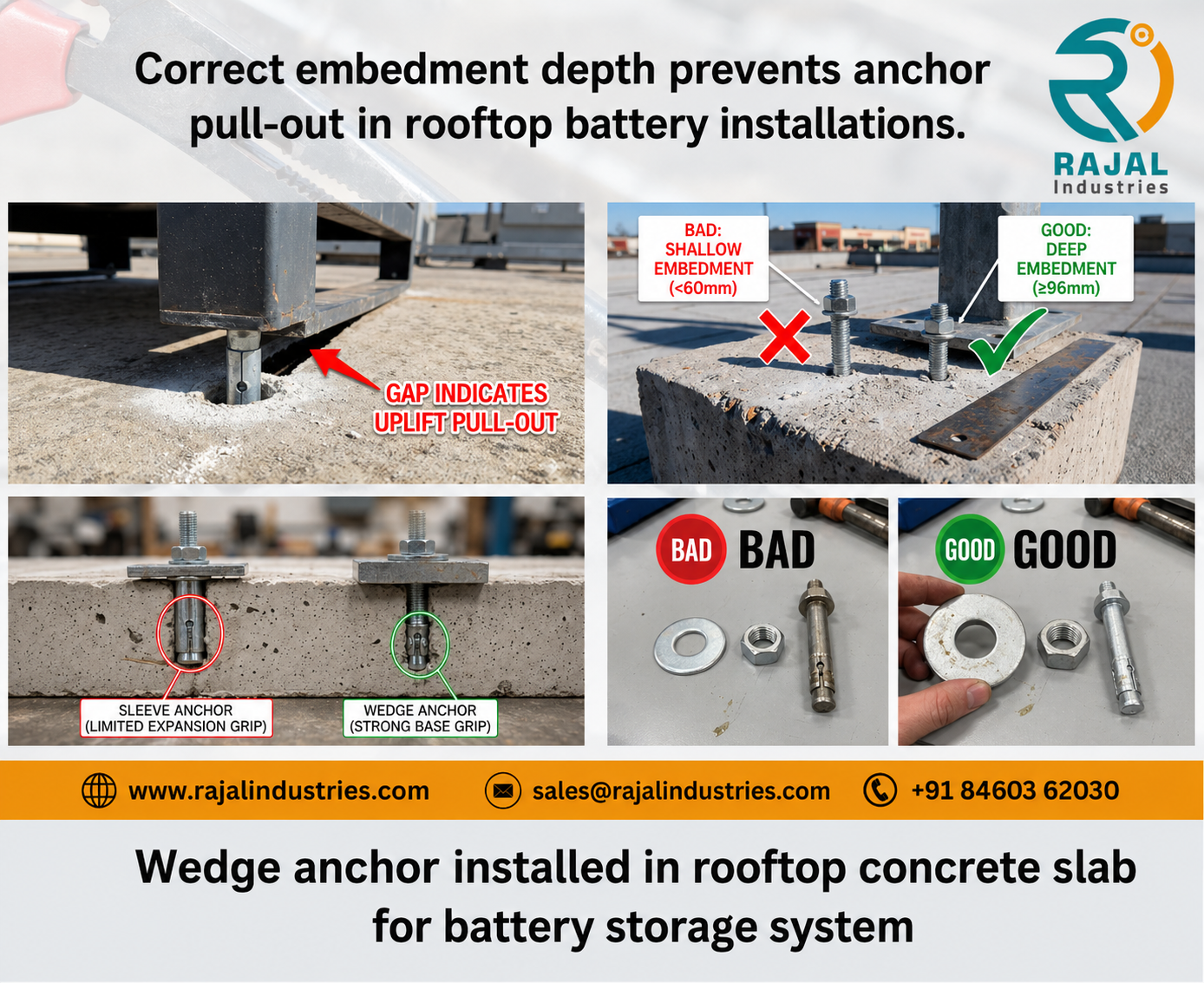
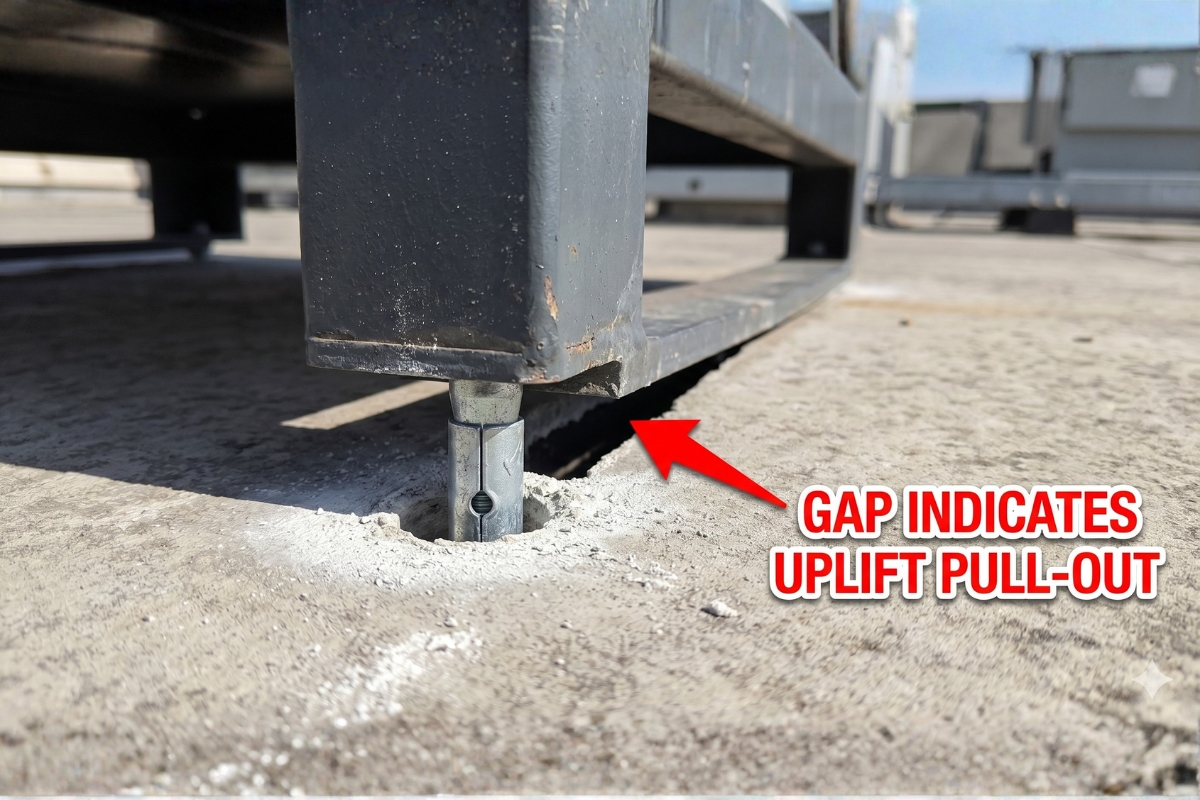
At a rooftop battery installation in a commercial building, technicians noticed slight uplift movement after heavy wind conditions. The battery cabinet base showed minor gap from slab surface.
Anchor used: M12 sleeve anchor
Embedment depth: 65 mm
Slab thickness: 120 mm
Wind speed during event: 110 km/h
No bolt broke.
The anchor slowly pulled upward.
This is a common problem with rooftop battery anchors.
Rooftop systems experience uplift force, not just vertical load.
If embedment depth is wrong, pull-out failure happens silently.
Why Rooftop Battery Anchors Fail
Rooftop battery systems face:
• Wind uplift
• Lateral wind shear
• Slab vibration
• Limited concrete thickness
Unlike ground-mounted systems, rooftop anchors must resist upward tension.
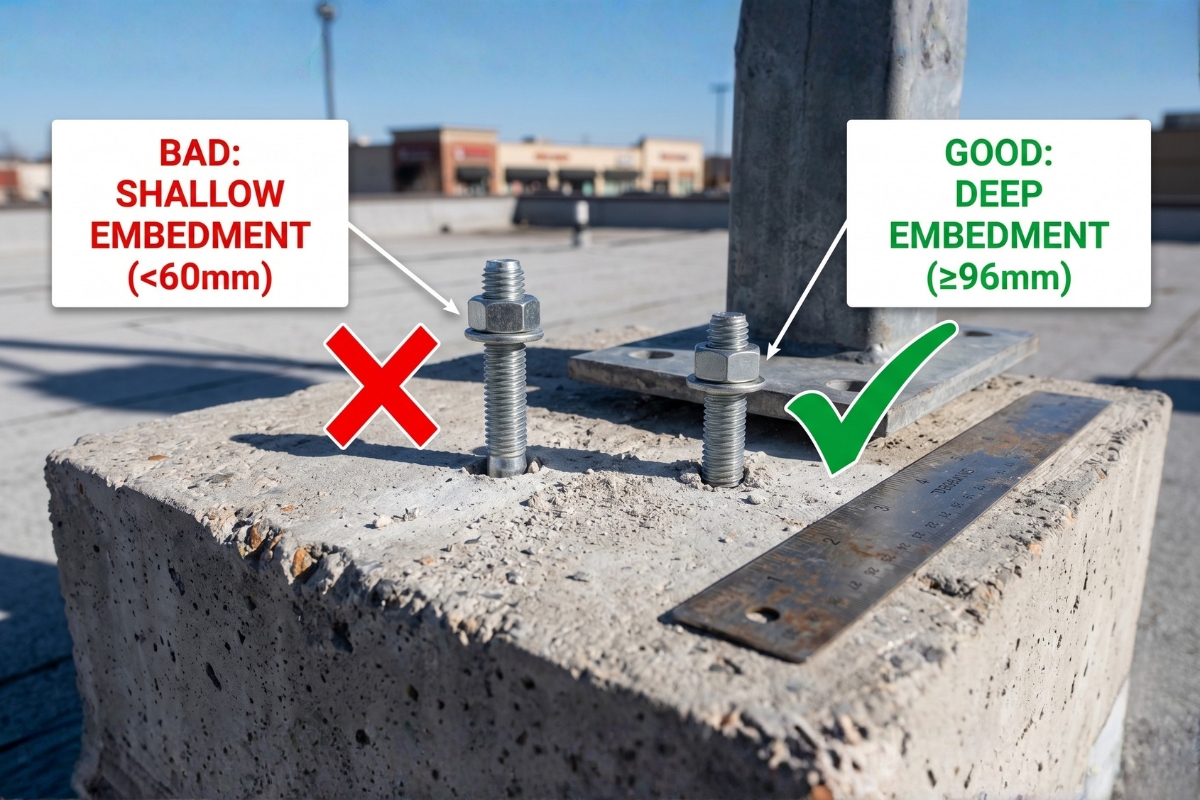
If embedment depth is shallow:
• Concrete cone breakout occurs
• Anchor expansion insufficient
• Pull-out resistance drops
Anchor selection must match wind load.
Pull-Out Force Calculation
Pull-out capacity depends on:
• Anchor diameter
• Embedment depth
• Concrete strength
• Edge distance
Approximate tensile capacity for M12 wedge anchor in C25 concrete:
≈ 25–35 kN (with proper embedment)
If embedment is shallow (≤ 60 mm):
Capacity may reduce below 15–18 kN.
Wind uplift on rooftop cabinet can exceed this during storm conditions.
Case Study: Sleeve Anchor vs Wedge Anchor
Observed system:
• M12 sleeve anchor
• 65 mm embedment
• No structural washer
• Zinc plated bolt
After 1 year:
• Slight rotation marks
• Concrete dust around hole
• Minor uplift gap
Sleeve anchors distribute expansion along sleeve.
Wedge anchors concentrate expansion at bottom, creating stronger hold.
Correct Embedment Depth for M12 Wedge Anchor
General guideline:
Minimum embedment depth = 8 × anchor diameter
For M12:
8 × 12 = 96 mm
Recommended embedment: 90–120 mm
Always verify slab thickness before drilling.
If slab is thin, structural design must change.
Recommended Setup for Rooftop Battery Anchors
For rooftop battery systems:
• M12 Wedge Anchor
• Embedment depth ≥ 90 mm
• Structural washer
• Heavy hex nut
• HDG fasteners for corrosion resistance
You can review specifications for our
👉 M12 Wedge Anchor for Rooftop Battery Systems
For corrosive rooftop environment use:
👉 HDG Fasteners for Outdoor Battery Installations
Structural washer improves load transfer to base plate.
Wedge Anchor vs Sleeve Anchor Comparison
| Parameter | Sleeve Anchor | Wedge Anchor |
| Pull-Out Resistance | Moderate | High |
| Suitable for Uplift | Limited | Yes |
| Embedment Depth Required | Lower | Higher |
| Rooftop Battery Use | Not Ideal | Recommended |
For rooftop battery anchors, wedge anchors are safer.
Concrete Breakout Failure Concept
When anchor is loaded in tension:
Concrete may fail in cone shape.
Failure load proportional to:
• Embedment depth
• Concrete strength
Shallow embedment creates small breakout cone.
Deeper embedment increases resistance.
Wind Load Consideration
Wind uplift force depends on:
• Cabinet height
• Wind speed
• Roof exposure
• Location
Engineers must calculate:
Uplift force ≥ anchor tensile capacity with safety factor.
Rooftop battery anchors must resist extreme events.
Torque Recommendation for M12 Wedge Anchor
| Anchor Type | Recommended Torque |
| M12 Sleeve Anchor | 50–65 Nm |
| M12 Wedge Anchor | 70–85 Nm |
Proper torque ensures full expansion inside concrete.
Under-torque reduces holding strength.
Inspection Checklist for Rooftop Battery Anchors
✔ Verify embedment depth
✔ Check anchor grade
✔ Inspect for uplift gap
✔ Ensure structural washer present
✔ Check torque annually
✔ Replace shallow sleeve anchors
Rooftop anchors must be inspected after heavy wind events.
FAQ
Q1: Why do rooftop battery anchors pull out during wind?
Because shallow embedment depth and improper anchor selection reduce pull-out resistance. M12 wedge anchor with correct embedment performs better than sleeve anchor in rooftop battery anchors applications.
Q2: What is correct embedment depth for M12 wedge anchor?
For rooftop battery anchors, recommended embedment depth is 90–120 mm depending on slab thickness and concrete grade.
Q3: Are sleeve anchors suitable for rooftop battery systems?
Sleeve anchors have lower pull-out capacity. For wind uplift zones, M12 wedge anchor is preferred for rooftop battery anchors.
Q4: Should HDG fasteners be used on rooftop battery systems?
Yes. HDG fasteners provide corrosion resistance in outdoor environments and improve lifespan of rooftop battery anchors.
Q5: Can flat washer replace structural washer?
Flat washer provides limited load distribution. Structural washer is better for heavy base plate connections.
Q6: How often should rooftop battery anchors be inspected?
Inspection should be performed annually and after major wind events.
Conclusion
Anchor pull-out in rooftop battery systems is usually caused by shallow embedment and incorrect anchor type.
For safe rooftop battery anchors:
• Use M12 wedge anchor
• Maintain proper embedment depth
• Use structural washer
• Apply correct torque
• Select HDG fasteners for outdoor exposure
Anchor selection must consider uplift force, not only vertical load.
Need anchor calculation for your rooftop battery project?
Contact our engineering team for load-based embedment recommendation.
References
- ACI 318 – Concrete anchor design
- EN 1992 – Concrete structures
- ASTM A153 – Hot dip galvanizing
- ICC-ES Anchor evaluation reports