

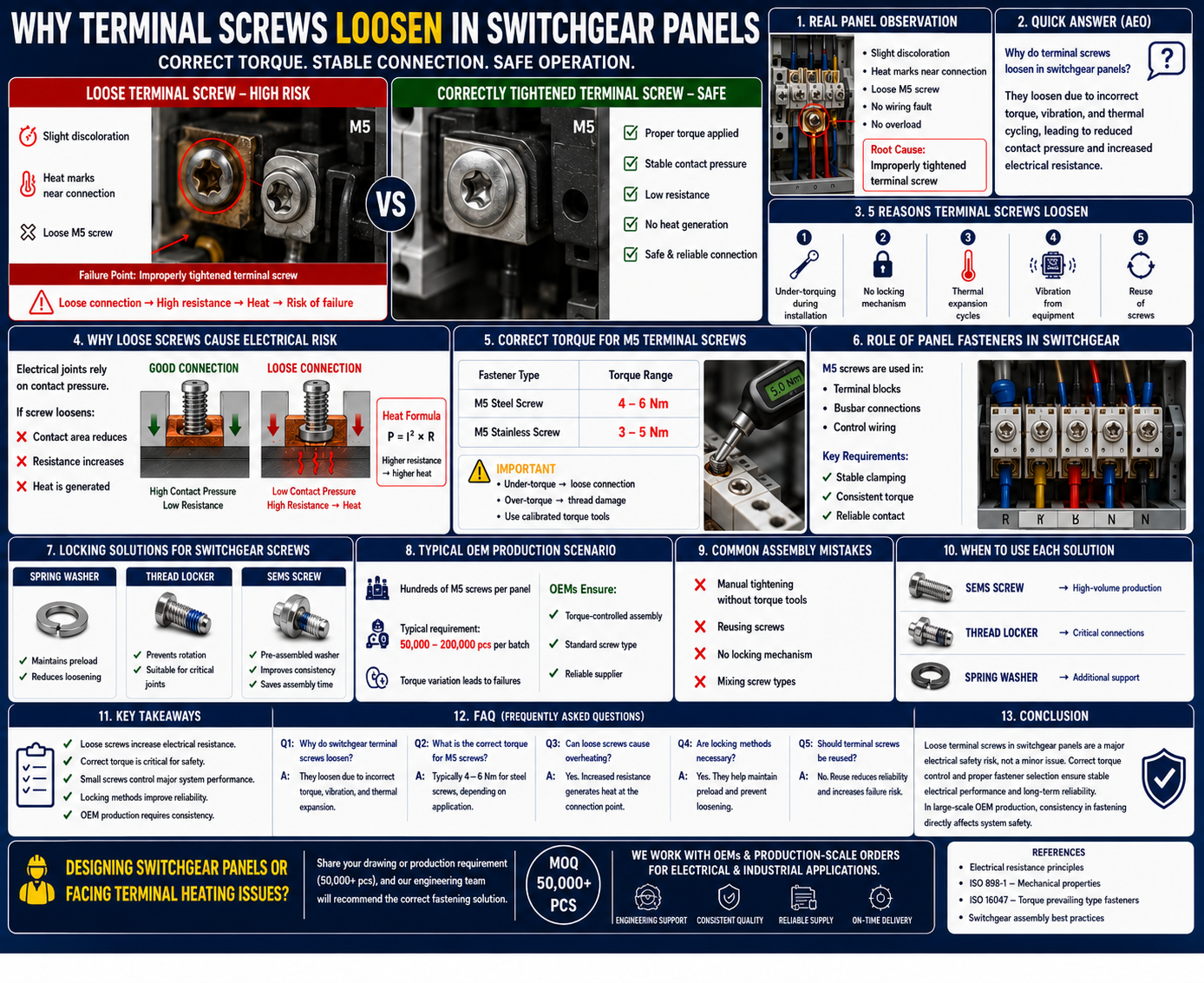
Introduction – Real Panel Observation
During inspection of a switchgear panel, one terminal showed:
👉 Slight discoloration
👉 Heat marks near connection
👉 Loose M5 screw
No wiring fault. No overload.
Failure point:
👉 Improperly tightened terminal screw
This is a common issue in switchgear systems where electrical connections depend on correct torque and stable fastening.
👉 Electrical continuity
👉 Contact resistance
👉 Heat generation
In OEM panel manufacturing, these screws are used in 50,000–200,000 pcs batches, where torque inconsistency leads to safety risks.
Quick Answer
Why do terminal screws loosen in switchgear panels?
They loosen due to incorrect torque, vibration, and thermal cycling, leading to reduced contact pressure and increased electrical resistance.
What is Switchgear Screw Loosening?
Switchgear screw loosening is the loss of clamping force in terminal connections, causing poor electrical contact and increased resistance.
5 Reasons Terminal Screws Loosen
- Under-torquing during installation
- No locking mechanism
- Thermal expansion cycles
- Vibration from equipment
- Reuse of screws
Why Loose Screws Cause Electrical Risk
Electrical joints rely on:
👉 Contact pressure
If screw loosens:
- Contact area reduces
- Resistance increases
- Heat is generated
Heat Formula
👉 P = I² × R
Higher resistance → higher heat
Correct Torque for M5 Terminal Screws
| Fastener Type | Torque Range |
| M5 Steel Screw | 4–6 Nm |
| M5 Stainless Screw | 3–5 Nm |
Important
- Under-torque → loose connection
- Over-torque → thread damage
- Use calibrated torque tools
Role of Panel Fasteners in Switchgear
M5 screws are used in:
- Terminal blocks
- Busbar connections
- Control wiring
Key Requirement
✔ Stable clamping
✔ Consistent torque
✔ Reliable contact
Locking Solutions for Switchgear Screws
🔹 Spring Washer
✔ Maintains preload
✔ Reduces loosening
🔹 Thread Locker
✔ Prevents rotation
✔ Suitable for critical joints
🔹 Sems Screw
✔ Pre-assembled washer
✔ Improves consistency
Typical OEM Production Scenario
In switchgear panel manufacturing:
- Hundreds of M5 screws per panel
- Typical requirement: 50,000–200,000 pcs per batch
- Torque variation leads to failures
OEMs ensure:
✔ Torque-controlled assembly
✔ Standard screw type
✔ Reliable supplier
Common Assembly Mistakes
- Manual tightening without torque tools
- Reusing screws
- No locking mechanism
- Mixing screw types
👉 These lead to overheating and failure
When to Use Each Solution
✔ Sems screw → high-volume production
✔ Thread locker → critical connections
✔ Spring washer → additional support
Key Takeaways
• Loose screws increase electrical resistance
• Correct torque is critical for safety
• Small screws control major system performance
• Locking methods improve reliability
• OEM production requires consistency
FAQ
Q1: Why do switchgear terminal screws loosen?
They loosen due to incorrect torque, vibration, and thermal expansion.
Q2: What is the correct torque for M5 screws?
Typically 4–6 Nm for steel screws, depending on application.
Q3: Can loose screws cause overheating?
Yes. Increased resistance generates heat at the connection point.
Q4: Are locking methods necessary?
Yes. They help maintain preload and prevent loosening.
Q5: Should terminal screws be reused?
No. Reuse reduces reliability and increases failure risk.
Conclusion
Loose terminal screws in switchgear panels are a major electrical safety risk, not a minor issue.
Correct torque control and proper fastener selection ensure stable electrical performance and long-term reliability.
In large-scale OEM production, consistency in fastening directly affects system safety.
👉 We work with OEMs and production-scale orders (MOQ 50,000+ pcs) for electrical and industrial applications.
Designing switchgear panels or facing terminal heating issues?
Share your drawing or production requirement (50,000+ pcs), and our engineering team will recommend the correct fastening solution.
References
- Electrical resistance principles
- ISO torque guidelines
- Switchgear assembly practices