

Introduction – Real Site Hook
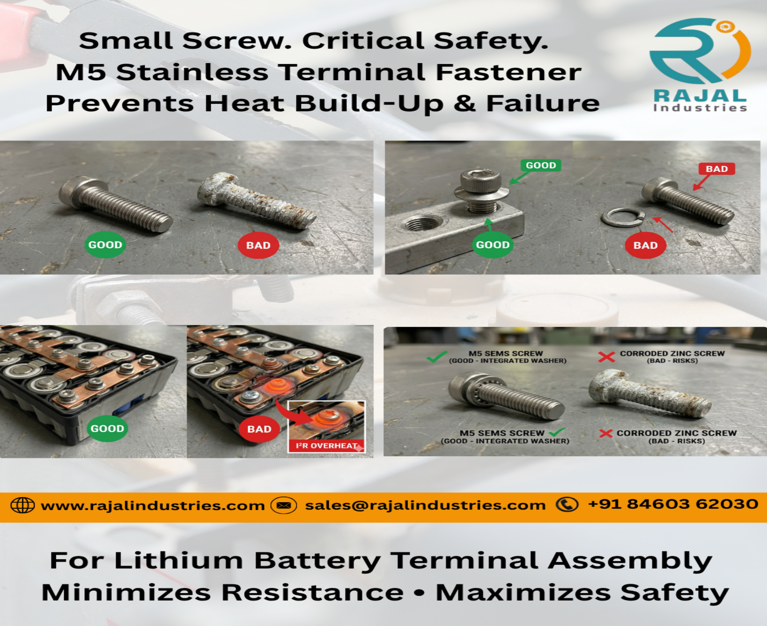
In a lithium battery module inspection, technicians detected abnormal heat at one terminal joint. Thermal scan showed 12°C higher temperature at one connection point.
Terminal screw used: M5 zinc plated machine screw
Washer: none
Torque: unknown
The battery cells were functioning correctly.
The problem was mechanical.
This is a serious issue involving lithium battery fasteners.
A small M5 screw can create large electrical risk.
Why Terminal Fasteners Are Critical in Lithium Packs
Lithium battery packs carry:
- • High DC current
- • Rapid charge-discharge cycles
- • Sensitive BMS connections
Terminal joints must provide:
- • Low contact resistance
- • Stable preload
- • Vibration resistance
- • Thermal stability
If M5 screw loosens:
- • Contact resistance increases
- • I²R heating rises
- • Terminal overheats
- • Insulation damage may occur
Mechanical failure leads to electrical risk.
Case Study: Overheated Terminal Screw
Measured conditions:
- • Current flow ≈ 80 A
- • Contact resistance slightly elevated
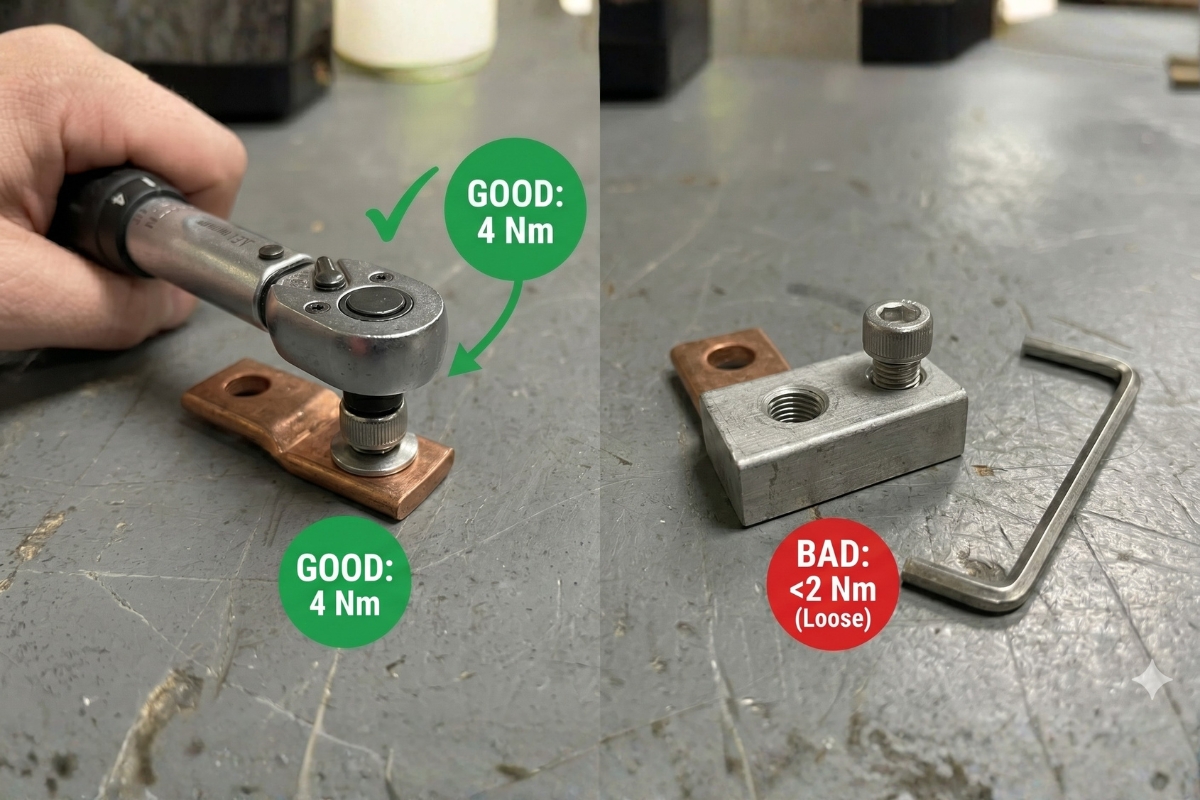
- • Screw torque below 3 Nm
Power loss formula:
P = I²R
Even small resistance increase causes heat.
For example:
If resistance rises to 5 milliohms:
P = 80² × 0.005
P = 32 W
That heat is concentrated at terminal interface.
Heat accelerates loosening further.
Correct M5 Terminal Fastener Setup
Recommended configuration:
- • M5 Stainless Steel Screw (SS304)
- • Spring washer M5
- • SEMS screw (integrated washer option)
- • Nylock nut (if through-bolt design)
You can review specifications for our
👉 M5 Stainless Steel Screws for Lithium Battery Packs
For compact assembly use:
👉 M5 SEMS Screw for Panel & Terminal Connections
For vibration resistance use:
👉 M5 Nylock Nut for Anti-Loosening Applications
Small fasteners require correct stack-up.
Why Stainless Steel Is Preferred
SS304 advantages:
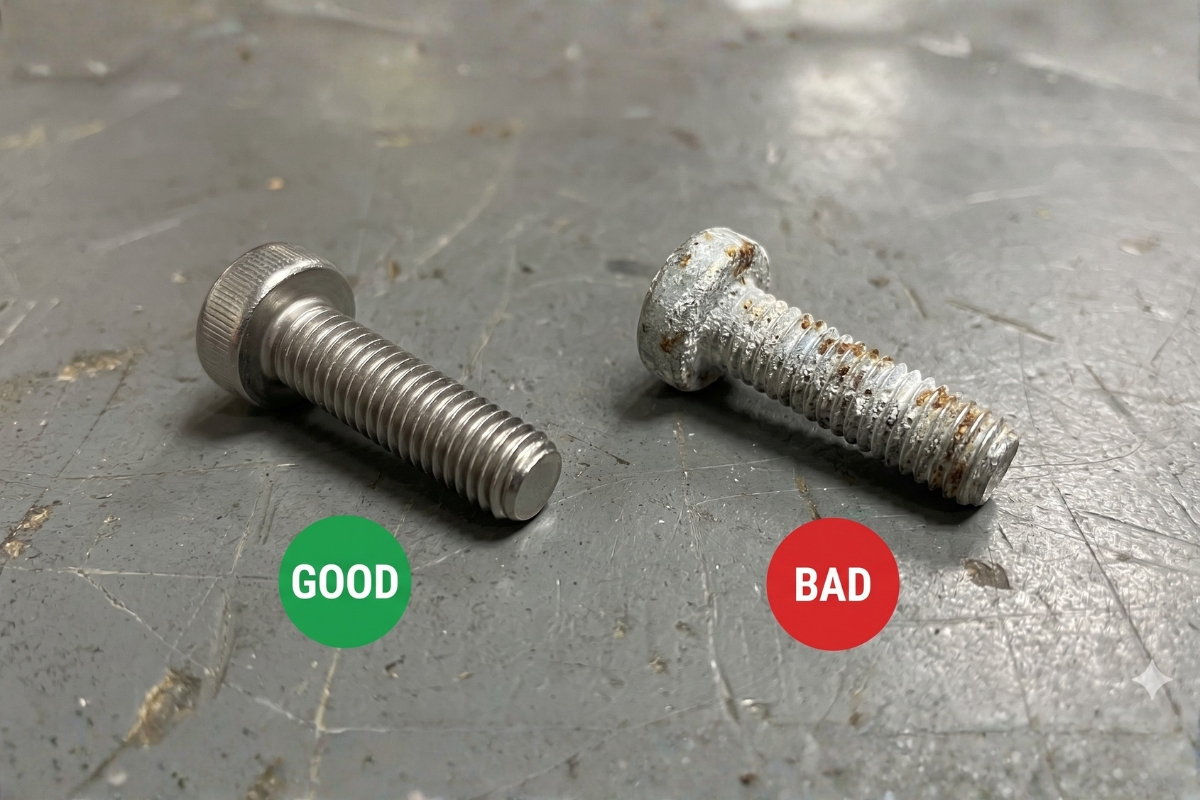
- • Corrosion resistance
- • Stable preload retention
- • Compatible with copper busbars
- • Reduced oxidation risk
Zinc plated screws may corrode inside battery enclosure.
Corrosion increases resistance.
Torque Recommendation for M5 Screws
| Screw Type | Recommended Torque |
| M5 Zinc Screw | 4–5 Nm |
| M5 SS304 Screw | 3.5–4.5 Nm |
| M5 SEMS Screw4 Nm | 4 Nm |
Over-torque risks thread stripping.
Under-torque increases contact resistance.
Torque control is critical in lithium packs.
Tensile Capacity of M5 Screw
Tensile stress area (M5) ≈ 14.2 mm²
SS304 yield strength ≈ 450 MPa
Yield load:
450 × 14.2 = 6,390 N
≈ 6.4 kN
Though tensile load is small compared to structural bolts, preload stability is essential for electrical reliability.
Common Mistakes in Lithium Battery Fasteners
Reusing terminal screws
No washer used
Incorrect torque tool
Using mild steel in humid pack
Mixing stainless screw with carbon nut
Even minor mistakes can lead to overheating.
Comparison Table: Standard vs SEMS Screw
| Parameter | Standard M5 Screw | M5 SEMS Screw |
| Washer Required | Yes | No (Integrated) |
| Assembly Speed | Moderate | Faster |
| Vibration Resistance | Depends | Improved |
| Risk of Washer Loss | Possible | Eliminated |
SEMS screws improve reliability in compact battery modules.
Inspection Checklist for Lithium Battery Fasteners
✔ Verify screw grade and material
✔ Measure torque during maintenance
✔ Inspect for discoloration or overheating
✔ Replace corroded screws
✔ Avoid over-tightening
✔ Use locking mechanism where required
Terminal screws must be part of preventive maintenance plan.
FAQ
Q1: Why do lithium battery fasteners loosen?
Vibration, thermal expansion, and insufficient torque cause preload loss.
Q2: Is stainless screw necessary in lithium battery packs?
Yes. Stainless screws resist corrosion and maintain stable contact resistance.
Q3: What torque should be applied to M5 terminal screw?
Typically 3.5–4.5 Nm depending on material and design.
Q4: Can small screw cause battery fire risk?
Yes. Increased resistance leads to overheating, which may damage insulation.
Q5: Are spring washers useful in lithium terminals?
Yes. They help maintain preload under vibration.
Q6: Should nylock nut be used in battery pack?
Yes, especially where vibration or repeated cycling occurs.
Conclusion
Lithium battery fasteners may be small, but their impact is large.
Loose M5 screws can cause overheating and safety risk.
Use:
- • M5 SS304 screws
- • Spring washers
- • SEMS screws where appropriate
- • Correct torque control
Preload stability equals electrical safety.
Need terminal fastener upgrade for your lithium battery system?
Contact our engineering team for safe and reliable fastener solutions.
References
IEC 62619 – Safety requirements for lithium batteries
ISO 3506 – Stainless steel fastener properties
IEEE battery safety guidelines
Machinery’s Handbook – Thread stress area data