

Introduction – Real Site Hook
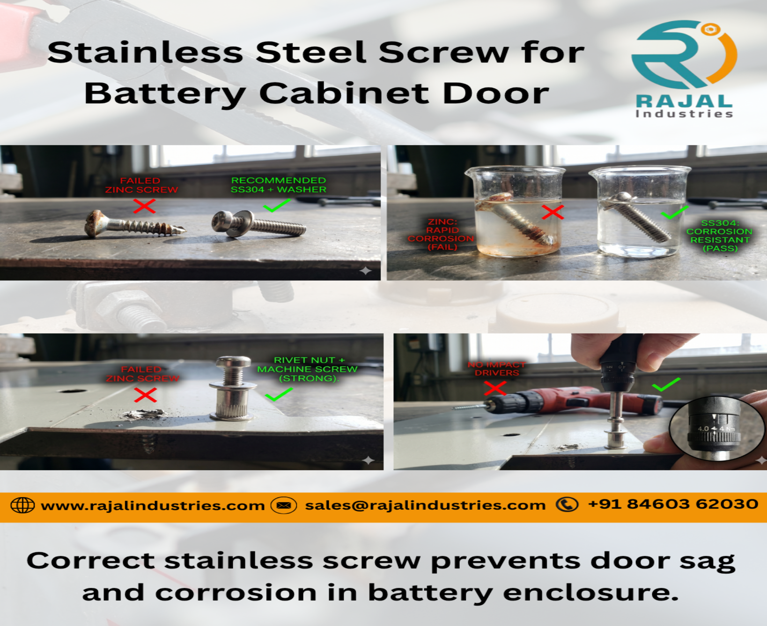
At a telecom battery shelter, one cabinet door dropped suddenly during maintenance. The hinge was intact. The sheet metal was fine. But two small screws holding the hinge had sheared.
Screw type: zinc self tapping screw
Size: approx M5 equivalent
Material: low-grade carbon steel
This is a common issue with battery enclosure screws.
Door weight was not excessive.
The screw material was weak.
Small screws carry repeated load cycles.
If screw selection is poor, door sag starts slowly and ends in failure.
Why Battery Cabinet Door Screws Fail
Battery enclosure doors experience:
- • Frequent opening and closing
- • Vibration from nearby equipment
- • Humidity and corrosion
- • Dynamic load on hinge side
Common problems:
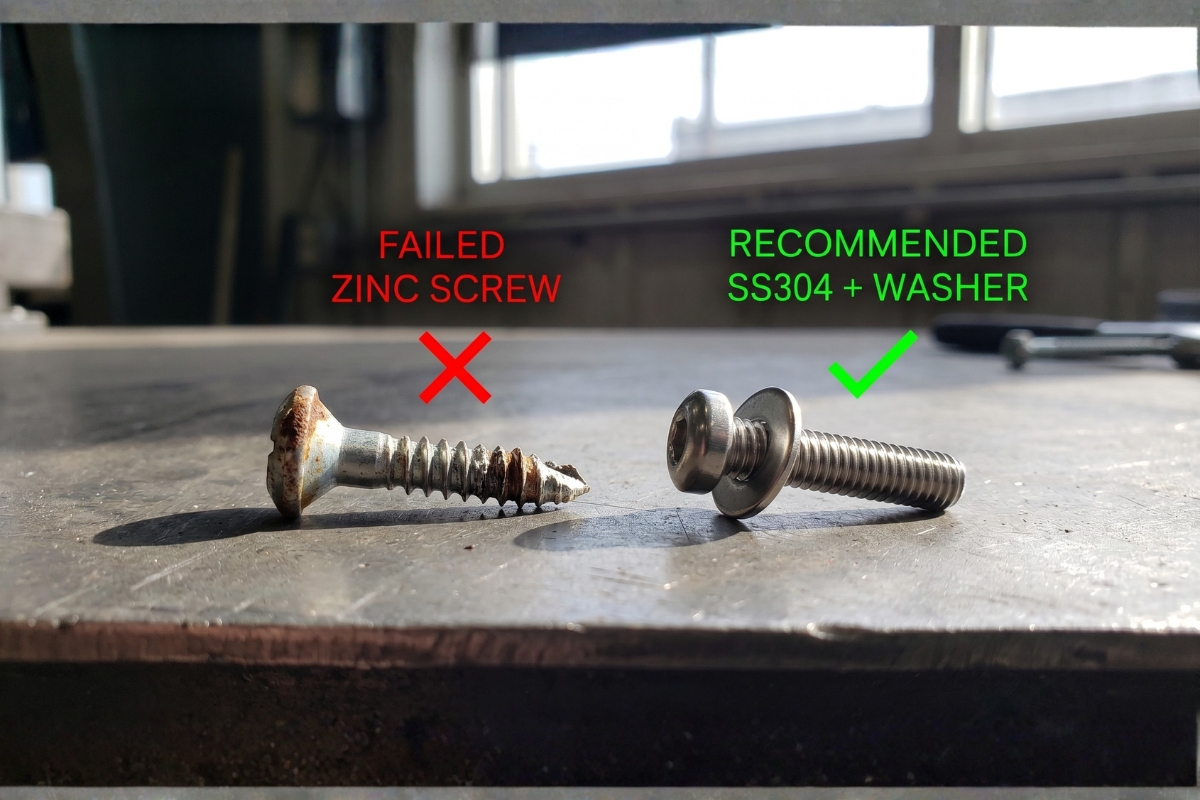
- • Self tapping screws stripping threads
- • Zinc plating corroding
- • Screw head snapping
- • Thread pull-out from thin sheet
Door hinge area carries bending moment.
Repeated stress concentrates at screw threads.
Case Study: Hinge Screw Pull-Out
Door weight: 18 kg
Distance from hinge: 400 mm
Moment at hinge:
M = Force × distance
≈ (18 × 9.81) × 0.4
≈ 70.6 Nm
If hinge uses 3 screws:
Each screw experiences shear and tension component.
Low-grade self tapping screws cannot sustain long-term cyclic loading.
Thread in thin sheet metal weakens quickly.
Why Self Tapping Screws Fail in Battery Enclosures
Self tapping screws:
- • Cut threads into thin sheet
- • Rely on sheet thickness
- • Limited pull-out strength
- • Sensitive to corrosion
In humid battery rooms:
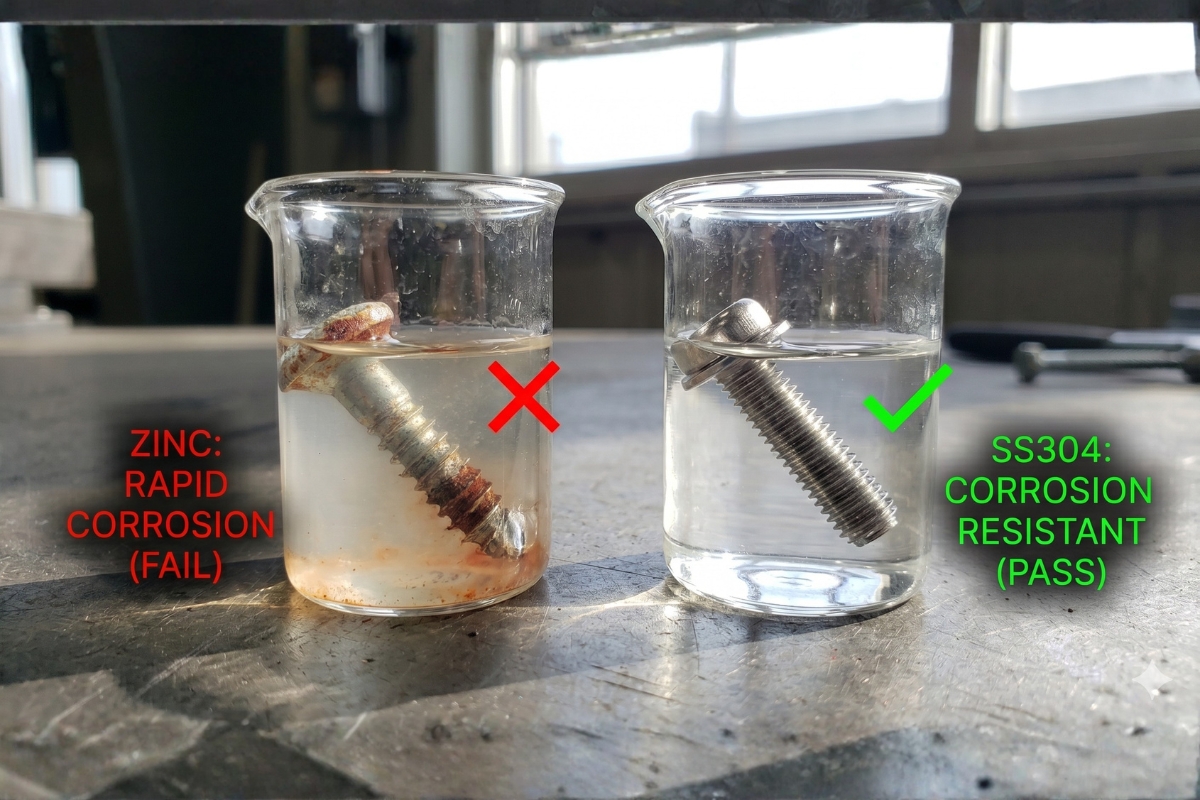
- • Zinc coating degrades
- • Threads weaken
- • Reinstallation damages hole
After few maintenance cycles, thread engagement reduces.
Failure becomes inevitable.
Correct Stainless Selection for Cabinet Doors
Recommended configuration:
- • M5 SS304 Machine Screw
- • Stainless steel captive screw for removable panels
- • Stainless rivet nut in sheet metal
- • Flat washer if required
You can review specifications for our
👉 M5 SS304 Machine Screws for Battery Enclosures
For panel doors use:
👉 Stainless Captive Screws for Battery Cabinets
For sheet metal mounting use:
👉 Stainless Rivet Nut for Thin Sheet Applications
Rivet nut provides stronger internal thread compared to self tapping.
Pull-Out Strength Consideration
Pull-out strength depends on:
- • Thread engagement length
- • Sheet thickness
- • Material strength
Machine screw + rivet nut provides:
- • Full thread engagement
- • Replaceable fastener
- • Higher reliability
Compared to self tapping screw, rivet nut system is stronger and serviceable.
Torque Recommendation for M5 Cabinet Screw
| Screw Type | Recommended Torque |
| M5 Zinc Self Tapping | 3–4 Nm |
| M5 SS304 Machine Screw | 3.5–4.5 Nm |
Do not over-torque thin sheet metal.
Over-tightening causes deformation.
Corrosion Comparison: Zinc vs SS304
| Parameter | Zinc Screw | SS304 Screw |
| Corrosion Resistance | Moderate | High |
| Humid Cabinet Suitability | Limited | Recommended |
| Reinstallation Durability | Low | High |
| Long-Term Door Support | Weak | Reliable |
Battery enclosure screws must resist corrosion and repeated stress.
Common Mistakes in Cabinet Screw Selection
Using self tapping screws in structural hinge
Mixing stainless screw with carbon steel rivet nut
No washer under screw head
Reusing damaged screws
Ignoring torque control
Door hardware must be designed for repeated load.
Inspection Checklist for Battery Cabinet Screws
✔ Check hinge screws annually
✔ Replace rusted fasteners
✔ Verify rivet nut integrity
✔ Ensure uniform torque
✔ Upgrade to SS304 in humid rooms
Door sag often begins with one weak screw.
FAQ
Q1: Why do battery enclosure screws fail at hinges?
Because hinges experience bending moment and repeated stress cycles.
Q2: Are self tapping screws suitable for battery cabinet doors?
Not recommended for heavy or frequently opened doors.
Q3: Is SS304 screw better than zinc plated?
Yes, especially in humid or corrosive battery rooms.
Q4: Should rivet nut be used instead of direct sheet threading?
Yes. Rivet nuts provide stronger and reusable threads.
Q5: What torque should be applied to M5 door screws?
Typically 3.5–4.5 Nm depending on design.
Q6: Can small screw cause door collapse?
Yes. Failure of hinge screw may cause door drop and damage.
Conclusion
Battery enclosure screws may appear small, but they carry repeated structural load.
Avoid cheap self tapping screws in hinge applications.
Upgrade to:
- • M5 SS304 machine screws
- • Stainless captive screws
- • Rivet nut mounting system
- • Proper torque control
Correct screw selection prevents door sag and failure.
Need stainless fasteners for your battery cabinet doors?
Contact our engineering team for enclosure-grade fastener solutions.
References
ISO 3506 – Stainless steel fastener properties
ISO 898-1 – Mechanical properties of carbon steel fasteners
Machinery’s Handbook – Thread engagement principles
IEC enclosure safety guidelines