

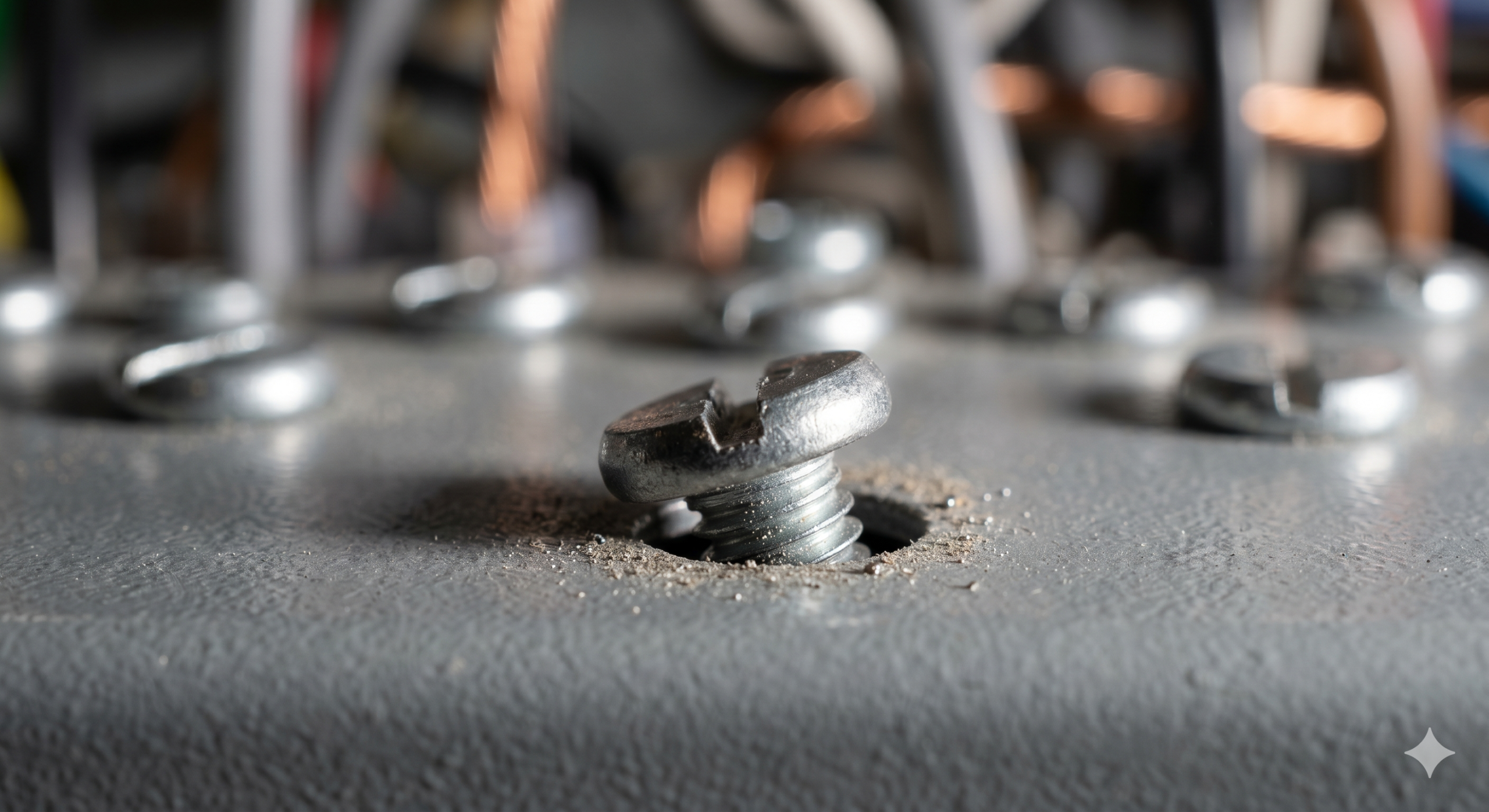
Introduction – A Common Failure Most Panel Manufacturers Discover Too Late
An electrical panel leaves the factory after passing final inspection.
Every M4 machine screw is tightened.
Every panel fastener appears secure.
Everything looks perfect.
Six months later, a maintenance technician opens the panel and notices something unexpected.
Several M4 machine screws have loosened.
Terminal covers are vibrating.
Panel doors have started rattling.
A few grounding screws have lost preload.
No one touched the panel.
No fasteners were removed.
So what happened?
This problem is one of the most common causes of service calls in LT Panels, HT Panels, PCC Panels, MCC Panels, Control Panels, PLC Panels, APFC Panels, and electrical enclosures.
The issue is rarely the screw itself.
The real problem is understanding why panel screw loosening occurs after installation.
Quick Answer
Why do M4 screws loosen in electrical panels?
M4 machine screws loosen when vibration, thermal expansion, insufficient preload, incorrect torque, poor locking methods, or thread damage reduce clamp force over time. Once preload decreases, the screw gradually rotates loose and panel reliability starts to decline.
What Is Panel Screw Loosening?
Panel screw loosening occurs when a machine screw gradually loses preload and clamp force after installation.
This commonly affects:
- M4 Machine Screws
- M5 Machine Screws
- Captive Screws
- Self-Tapping Screws
- Cage Nut Assemblies
- Rivet Nut Assemblies
Once preload is lost, vibration causes micro-movement between components and the fastener begins backing out.
Fasteners Commonly Used in Electrical Panels
Most electrical panel manufacturers use:
- M4 Machine Screws
- M5 Machine Screws
- Captive Panel Screws
- Self-Tapping Screws
- Cage Nuts
- Weld Nuts
- Rivet Nuts
- Spring Washers
- Serrated Lock Washers
- Hex Nuts
- Thread Forming Screws
These panel fasteners are widely used in:
- LT Panels
- HT Panels
- PCC Panels
- MCC Panels
- Control Panels
- PLC Panels
- APFC Panels
- VFD Panels
- Distribution Boards
Why M4 Machine Screw Loosening Causes Electrical Panel Failures
Many engineers assume a loose M4 screw is a minor issue.
In reality, a loose screw can cause:
- Terminal overheating
- Door vibration
- Grounding failures
- Component movement
- Noise complaints
- Maintenance issues
- Unexpected downtime
A single loose fastener can affect the reliability of an entire panel assembly.
5 Main Reasons M4 Screws Keep Backing Out
1. Continuous Vibration Inside the Panel
Electrical panels are exposed to vibration from:
- Cooling fans
- Transformers
- Contactors
- Motors
- Generators
- Nearby machinery
A panel containing multiple cooling fans may experience thousands of vibration cycles every day.
Over time, vibration reduces friction between threads.
Eventually, the M4 machine screw begins rotating loose.
2. Incorrect Torque During Assembly
Many assembly operators still tighten screws based on feel.
This creates inconsistent preload.
Typical Torque Values
| Fastener | Typical Torque |
| M4 Machine Screw (Steel) | 2.5–3.5 Nm |
| M4 Stainless Steel Screw | 2–3 Nm |
| M5 Machine Screw | 4–6 Nm |
Under-tightening creates insufficient clamp force.
Over-tightening damages threads.
Both increase the risk of future loosening.
3. Thermal Expansion and Contraction
Electrical panels experience daily temperature cycles.
When equipment operates:
- Metal expands
- Components move
- Fasteners stretch
When temperatures drop:
- Components contract
- Preload changes
Repeated thermal cycling gradually reduces clamp force.
This is especially common in outdoor panels and high-current switchgear systems.
4. Wrong Locking Method
Many panel manufacturers still rely only on plain washers.
Plain washers distribute load but do not prevent loosening.
Better solutions include:
- Spring Washers
- Serrated Lock Washers
- Captive Screws
- Nylon Patch Screws
- Thread-Locking Adhesives
- Prevailing Torque Nuts
The correct locking system depends on the application.
5. Thread Damage During Assembly
Thread damage often goes unnoticed.
A stripped thread may feel tight during assembly.
However, actual preload is much lower.
This commonly occurs in:
- Thin sheet metal
- Self-tapping screw joints
- Over-tightened machine screws
Once preload drops, loosening begins.
Simple Preload Calculation Example
Consider:
- M4 Machine Screw
- Tightening Torque = 3 Nm
Typical preload generated:
Approximately 2–3 kN
If vibration reduces preload by 40%:
Remaining preload:
1.2–1.8 kN
At this point:
- Joint movement increases
- Friction decreases
- Screw rotation begins
This is why preload matters more than torque alone.
M4 Machine Screw vs Captive Screw
| Fastener Type | Vibration Resistance | Maintenance Convenience | OEM Preference |
| M4 Machine Screw | Medium | Medium | Common |
| Captive Screw | High | Excellent | Increasing |
| Self-Tapping Screw | Medium | Low | Common |
| Cage Nut Assembly | High | Good | Common |
| Rivet Nut Assembly | High | Good | Growing |
Many electrical panel OEMs are moving toward captive screw systems for improved serviceability.
Real OEM Example
A control panel manufacturer experienced repeated field complaints.
Problems included:
- Rattling panel doors
- Loose terminal covers
- Maintenance callouts
Investigation found:
- Standard M4 machine screws
- No locking feature
- Fan-induced vibration
The OEM switched to:
- Captive Screws
- Serrated Lock Washers
- Controlled torque assembly
Service complaints dropped significantly.
Industries Most Affected by Panel Screw Loosening
This issue frequently affects:
- LT Panel Manufacturers
- HT Panel Manufacturers
- PCC Panel Manufacturers
- MCC Panel Manufacturers
- Control Panel Manufacturers
- PLC Panel Manufacturers
- APFC Panel Manufacturers
- Switchgear Manufacturers
- EV Charger Manufacturers
- Battery Cabinet Manufacturers
- Telecom Cabinet Manufacturers
Inspection Checklist for Panel Manufacturers
Before dispatching a panel:
✔ Verify torque values
✔ Check thread engagement
✔ Inspect stripped holes
✔ Verify grounding hardware
✔ Confirm locking washer selection
✔ Inspect captive screw requirements
✔ Evaluate vibration sources
✔ Verify assembly procedures
Typical Fastener Consumption in Panel Manufacturing
A medium-sized electrical panel manufacturer may consume annually:
- 100,000–500,000 M4 Machine Screws
- 50,000–200,000 M5 Machine Screws
- 20,000–100,000 Captive Screws
- 100,000+ Spring Washers
- 50,000+ Cage Nuts
- 50,000+ Rivet Nuts
This is why fastener standardization is becoming a major focus for OEM manufacturers.
Key Takeaways
- M4 machine screw loosening is usually caused by preload loss.
- Vibration and thermal expansion are major contributors.
- Incorrect torque increases failure risk.
- Captive screws improve maintenance and reliability.
- Spring washers and serrated washers help maintain clamp force.
- OEMs increasingly standardize panel fasteners to reduce service issues.
FAQ
Why do M4 machine screws loosen even when properly tightened?
Even correctly tightened M4 machine screws can loosen if vibration, thermal cycling, or preload loss occurs over time. Proper locking methods help reduce this risk.
Which fastener is best for preventing panel screw loosening?
Captive screws, machine screws combined with serrated lock washers, cage nut assemblies, and rivet nut systems generally perform better in vibration-prone applications.
Are M4 machine screws suitable for electrical panels?
Yes. M4 machine screws are among the most widely used panel fasteners in electrical panels, control panels, switchgear systems, and enclosures.
Are spring washers enough to stop loosening?
Spring washers help maintain preload but may not be sufficient for high-vibration applications. Additional locking methods may be required.
Why do panel doors start rattling?
Panel doors often rattle when mounting screws lose preload due to vibration, thermal expansion, or insufficient locking systems.
Should panel manufacturers use captive screws?
Many OEM panel manufacturers prefer captive screws because they reduce lost hardware, improve serviceability, and increase maintenance efficiency.
Can vibration loosen screws in indoor electrical panels?
Yes. Cooling fans, transformers, and nearby machinery can create enough vibration to gradually loosen panel fasteners.
Conclusion
Panel screw loosening is not simply a maintenance problem.
It is a fastening system problem.
Correct selection of M4 machine screws, captive screws, spring washers, serrated lock washers, cage nuts, rivet nuts, and proper torque control can significantly improve panel reliability.
For OEM manufacturers producing 50,000–500,000 fasteners annually, even small improvements in fastening performance can reduce service costs, improve product quality, and prevent field failures.
We work with OEMs, electrical panel manufacturers, switchgear manufacturers, exporters, and production-scale orders (MOQ 50,000+ pcs) for machine screws, captive screws, cage nuts, rivet nuts, washers, and custom industrial fasteners.