


Reused Rusted Bolts in Lead Acid Battery Rooms? This Is What Is Failing on Your Site
Lead acid battery rooms operate in one of the most aggressive indoor environments. During charging, batteries release acidic fumes, moisture, and hydrogen gas. These conditions attack steel fasteners used on battery racks, cable supports, earthing frames, and inverter skids.
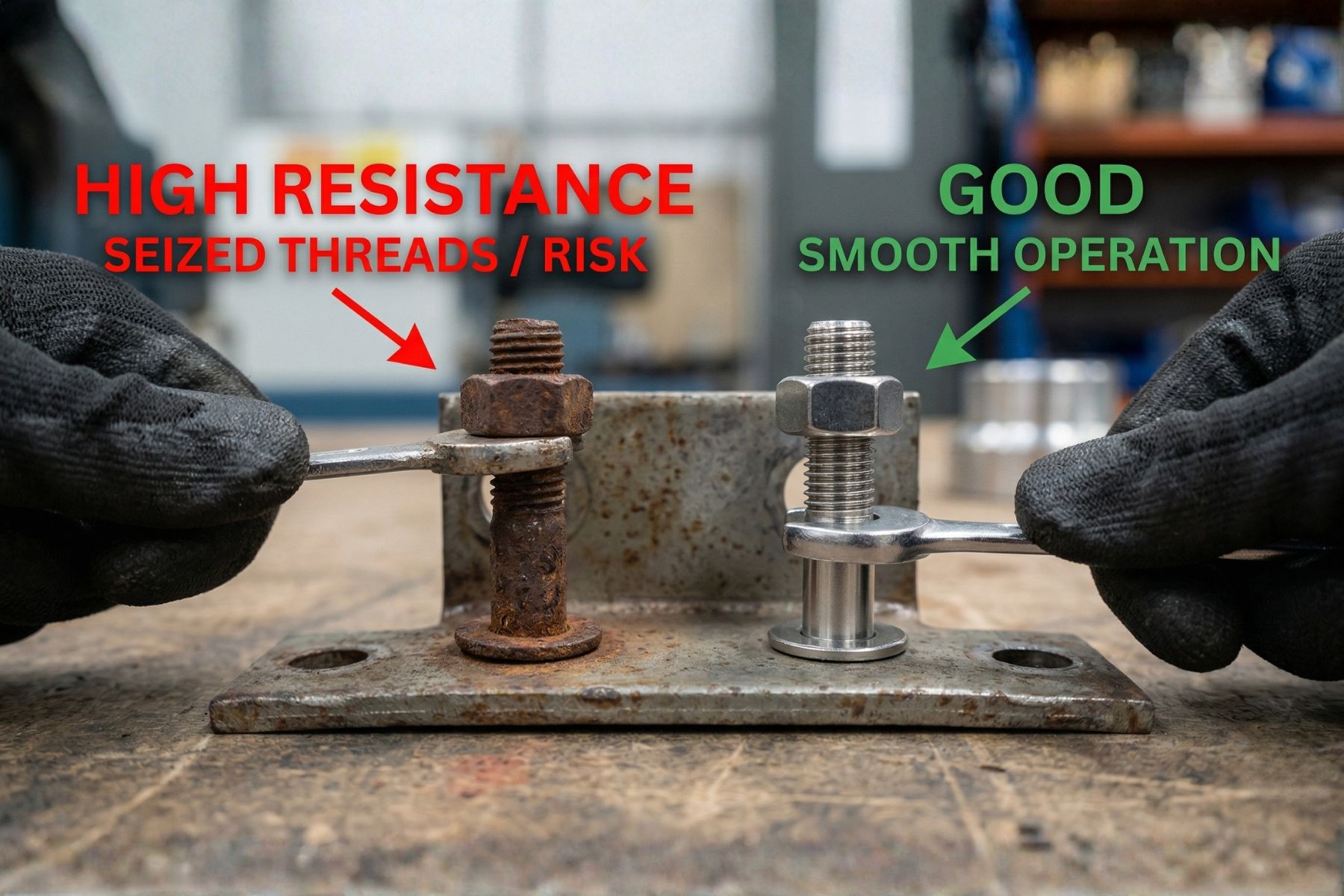
Across UPS rooms, telecom backup systems, and industrial battery banks, engineers are finding rusted M10 bolts, seized nuts, pitted threads, cracked washers, and loose joints. Many of these fasteners are reused again and again after maintenance.
This is not cost saving.
It is a serious safety risk.
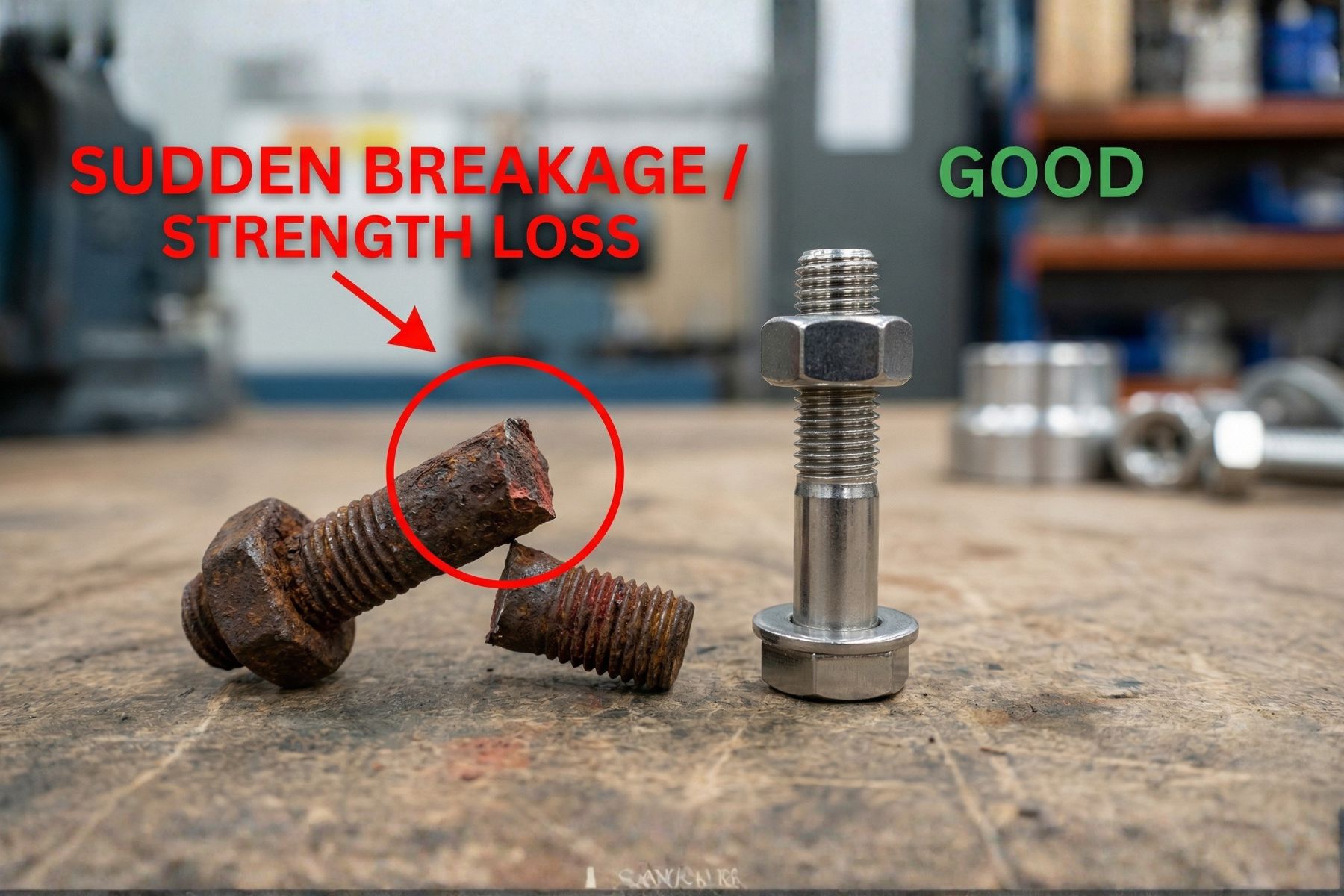
Once corrosion starts, metal loses strength. The threads weaken, clamping force drops, and joints begin to move. A rusted bolt can fail suddenly without warning.
How This Problem Appears on Site
Brown rust stains on bolts
White powder around joints
Nuts hard to rotate
Bent or cracked washers
Racks vibrating
8 Hidden Safety Risks from Reused Rusted Fasteners
1) Strength Loss
Corrosion reduces load capacity.
2) Seized Threads
Maintenance becomes dangerous.
3) Sudden Bolt Breakage
Weakened metal snaps.
4) High Electrical Resistance
Corroded joints heat up.
5) Frame Instability
Loose racks shift.
6) Fire Risk
Loose joints spark.
7) Chemical Damage
Fumes spread corrosion
8) False Security
Rust hides internal cracks.
Technical Failures Seen in the Field
| Issue | Result |
| Rusted bolts | Weak joints |
| Pitted threads | Reduced grip |
| Loose racks | Structural risk |
| Overheating joints | Fire hazard |
Correct Fastener Setup for Lead Acid Battery Rooms
Size: M10
Material: SS304 stainless
Hardware: Lock nuts, flat washers, threaded rods, hex bolts
How to Eliminate Safety Risks
Replace rusted bolts immediately
Use SS304 fasteners only
Never reuse corroded hardware
Inspect every 3 months
Lead acid battery safety depends on corrosion-resistant fasteners.
Using SS304 M10 hex bolts, lock nuts, flat washers, and threaded rods prevents rust, maintains joint strength, and protects battery rooms from sudden failure.
If your fasteners are rusted, the structure is already unsafe.
Engineering Truth
Rust is not cosmetic. It is structural failure.