

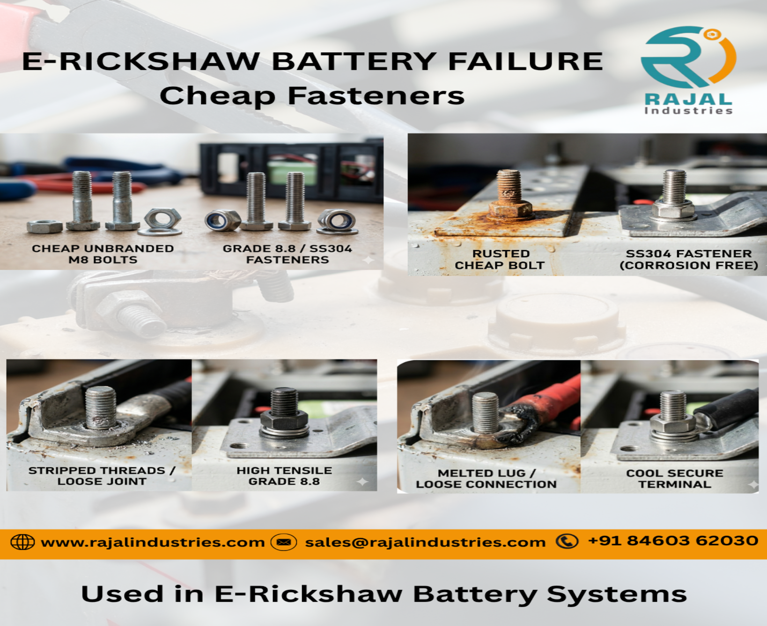
Cheap Fasteners Causing Frequent E-Rickshaw Battery Failures? This Is What Is Failing on Your Site
E-rickshaws operate in harsh conditions: vibration, dust, moisture, heat, and daily maintenance. Their battery frames and terminals are held together using M8 fasteners that must stay tight and corrosion-free.
Across EV service centers, technicians are finding loose bolts, rusted joints, broken washers, unstable trays, and electrical faults. In most cases, the root cause is simple:
Low-quality fasteners were used.
This is not a driving problem.
It is a fastener quality failure.
Cheap bolts are often made from soft steel, poor plating, and inconsistent threads. They lose strength quickly and cannot hold under vibration.
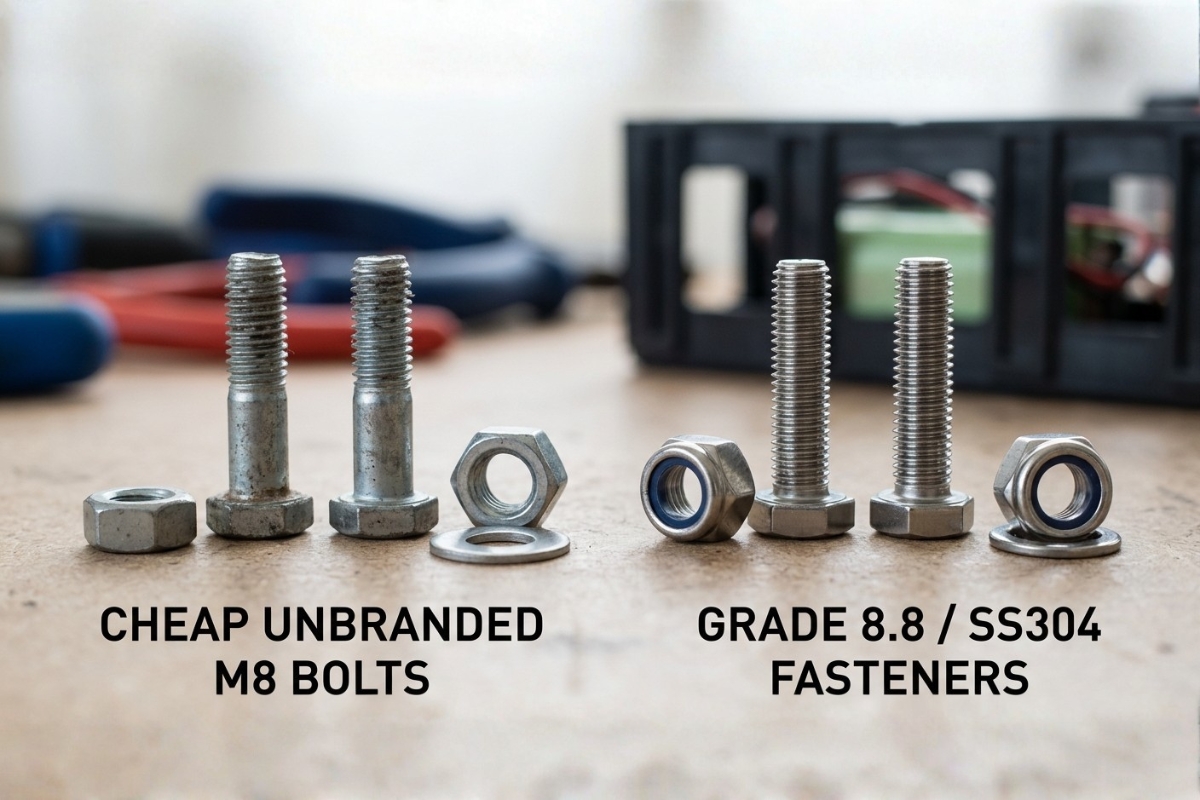
How This Problem Appears on Site
Rust within weeks
Stripped threads
Loose battery trays
Melted cable lugs
Frequent retightening
7 Hidden Costs of Cheap Fasteners
1) Short Life
They fail quickly.
2) High Labor
Repeated tightening.
3) Frame Damage
Loose joints crack brackets.
4) Electrical Faults
Loose terminals heat up.
5) Safety Risk
Short circuits and fires.
6) Warranty Claims
Repeated failures.
7) Vehicle Downtime
Lost income.
Technical Failures Seen in the Field
| Issue | Result |
| Rusted bolts | Weak joints |
| Stripped threads | Frame damage |
| Loose trays | Battery movement |
| Burnt lugs | Electrical risk |
Correct Fastener Setup for E-Rickshaws
Size: M8
Material Options: SS304 or Grade 8.8
Hardware: Lock nuts, spring washers, hex bolts
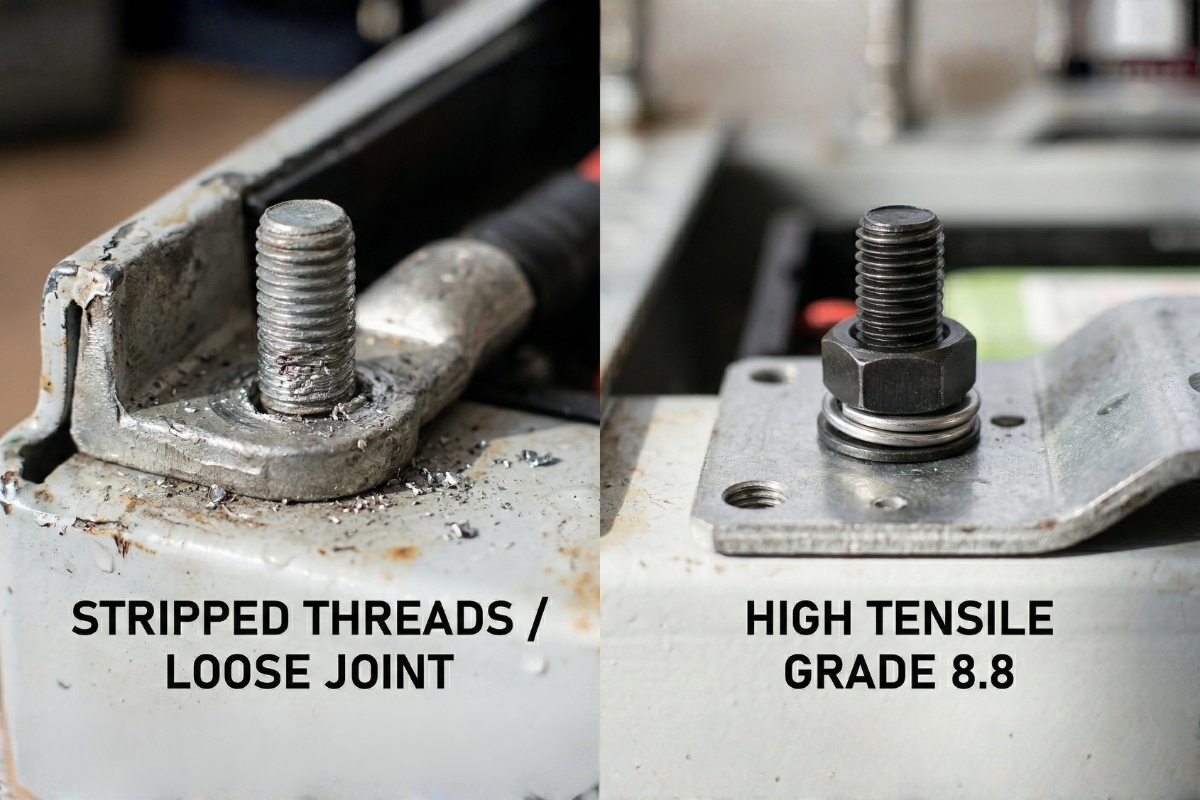
How to Improve Battery Reliability
Stop using cheap bolts
Upgrade to grade 8.8 or SS304 fasteners
Add spring washers and lock nuts
Replace hardware during service
Battery fastener quality directly impacts e-rickshaw reliability.
Using M8 hex bolts, SS304 fasteners, grade 8.8 hardware, lock nuts, and spring washers reduces failures and service cost.
If your EV batteries keep failing, your fasteners are already the problem.
Engineering Truth
A weak bolt creates a weak vehicle.
External References
ISO Fastener Quality – https://www.iso.org
EV Safety – https://www.iea.org