

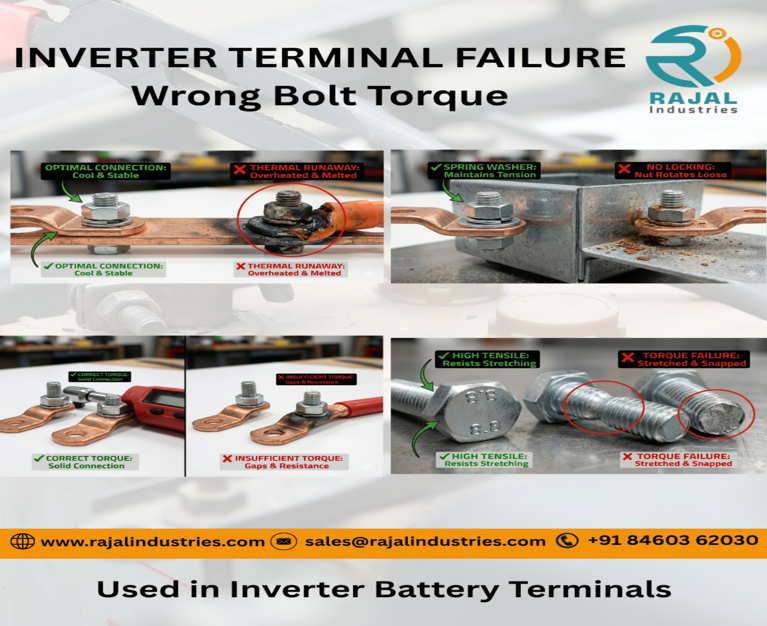
Wrong Torque on Inverter Battery Terminals? This Is What Is Failing on Your Site
Inverter battery systems depend on precise electrical connections. The terminal joints must carry high current without overheating. These joints rely on M8 hex bolts that must be tightened to the correct torque.
Across solar backup rooms and UPS installations, engineers are now seeing loose terminals, burnt lugs, melted insulation, voltage drops, and inverter alarms. When checked, the root cause is simple:
The bolt was not tightened to the correct torque.
This is not a wiring issue.
It is a fastener torque failure.
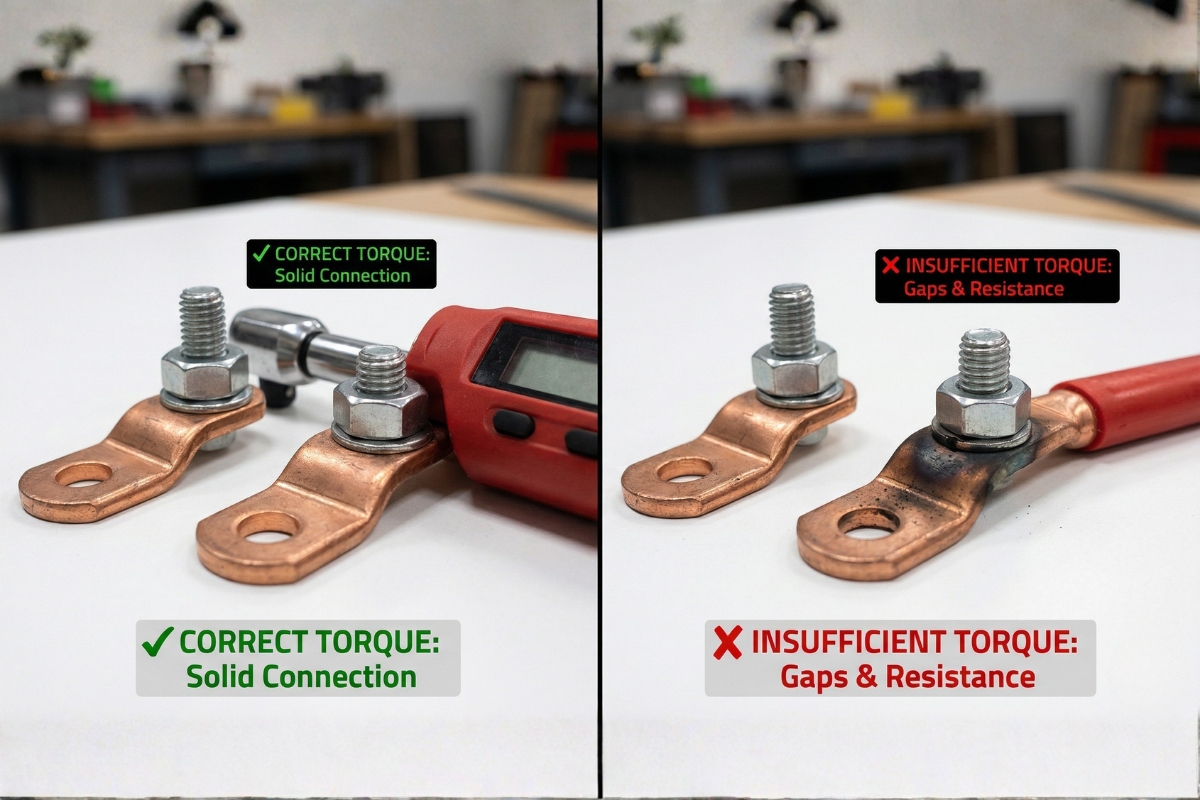
Too little torque allows movement and heat buildup. Too much torque stretches the bolt and damages threads.
How This Problem Appears on Site
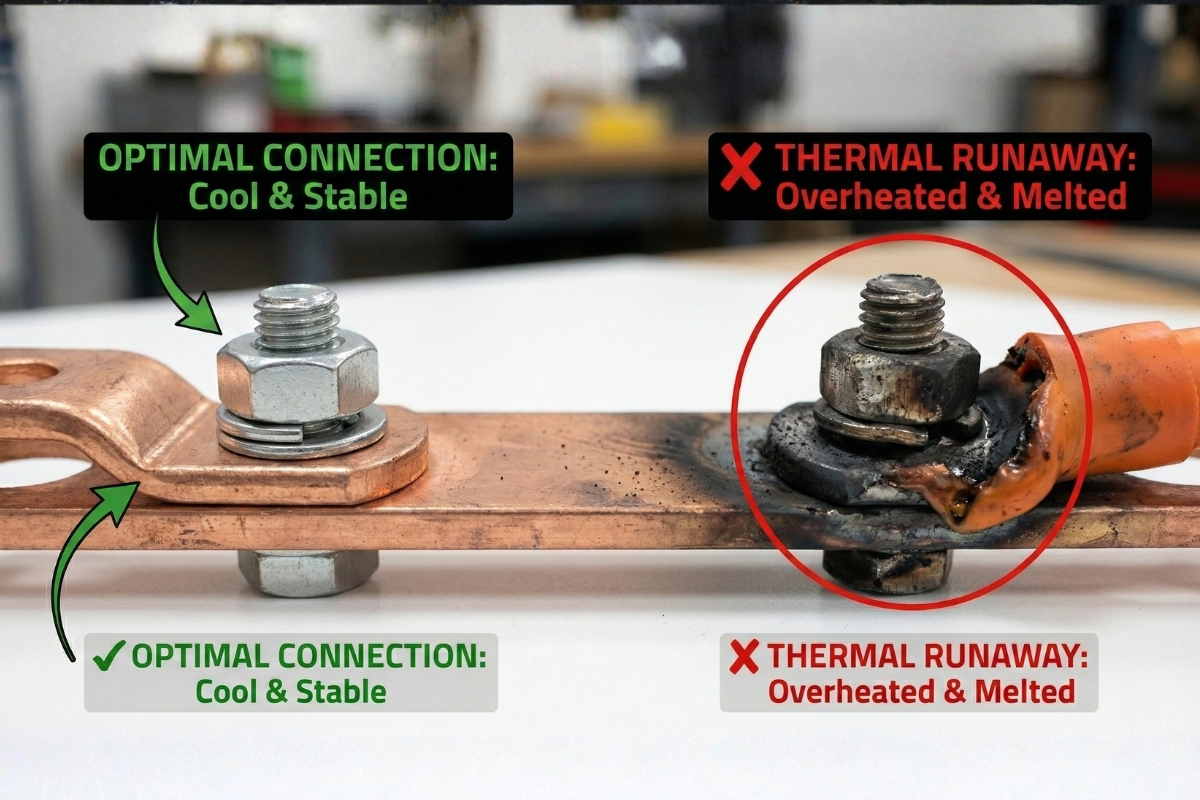
Burn marks at terminals
Hot connection points
Loose cable lugs
Deformed washers
Snapped bolts
7 Causes of Torque-Based Failures
1) No Torque Wrench
Hand tightening is inconsistent.
2) Wrong Bolt Grade
Soft bolts stretch.
3) No Spring Washer
Tension drops under vibration.
4) No Lock Nut
Nut rotates loose.
5) Corrosion
Increases friction and false torque.
6) Mixed Materials
Copper and steel expand differently.
7) Reused Hardware
Threads already damaged.
Technical Failures Seen in the Field
| Issue | Result |
| Loose terminals | High resistance |
| Burnt lugs | Fire risk |
| Stretched bolts | Joint failure |
| Voltage drop | System faults |
Correct Fastener Setup for Battery Terminals
Size: M8
Material: Grade 8.8 or SS304
Hardware: Spring washers, nylock nuts, hex bolts
How to Prevent Torque Failures
Use a torque wrench
Select grade 8.8 or SS304 bolts
Add spring washers
Use nylock nuts
Replace damaged bolts
Inverter battery torque errors are a major cause of electrical failure.
Using M8 grade 8.8 or SS304 bolts, spring washers, and nylock nuts ensures stable electrical joints and prevents overheating.
If terminals show burn marks, torque failure has already started.
Engineering Truth
Correct torque is as important as the bolt itself.