

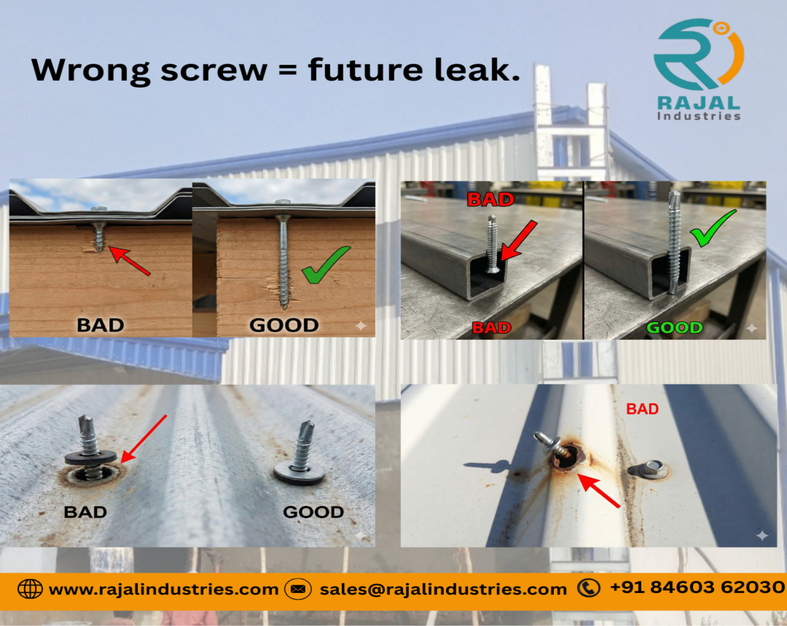
Why roofing screws back out after installation
Many roofing systems look perfect on Day 1.
Six months later:
This is not installer error.
It’s usually vibration combined with wrong fastener selection.
What causes screws to back out
- 1. Thermal cycling
Roof sheets expand and contract daily.
This movement slowly rotates screws loose.
- 2. Wind vibration
Wind causes micro-movement in sheets.
Screws experience cyclic loading.
- 3. Wrong screw type
Using stitch screws where purlin screws are needed causes poor thread engagement.
- 4. Short screws
Insufficient penetration into purlins leads to weak grip.
- 5. No locking feature
Plain screws without thread-locking or sealing lose preload faster.
Typical roofing fastener types
- Stitch screws – sheet-to-sheet
- Lap fasteners – overlaps
- Purlin fasteners – sheet-to-purlin
- Self drilling screws – drilling and fixing
Each has a different role.
Using the wrong one leads to loosening.
What this causes
- Leaks
- Noise
- Sheet flutter
- Fatigue cracks
- Ongoing maintenance
- Client complaints
How to prevent screws backing out
Use correct screw type per location
Ensure sufficient embedment depth
Use washers with proper compression
Use vibration-resistant screws
Inspect after first season
Final thought
Roofs don’t fail suddenly.
They loosen quietly.
And loose screws are the first sign.